

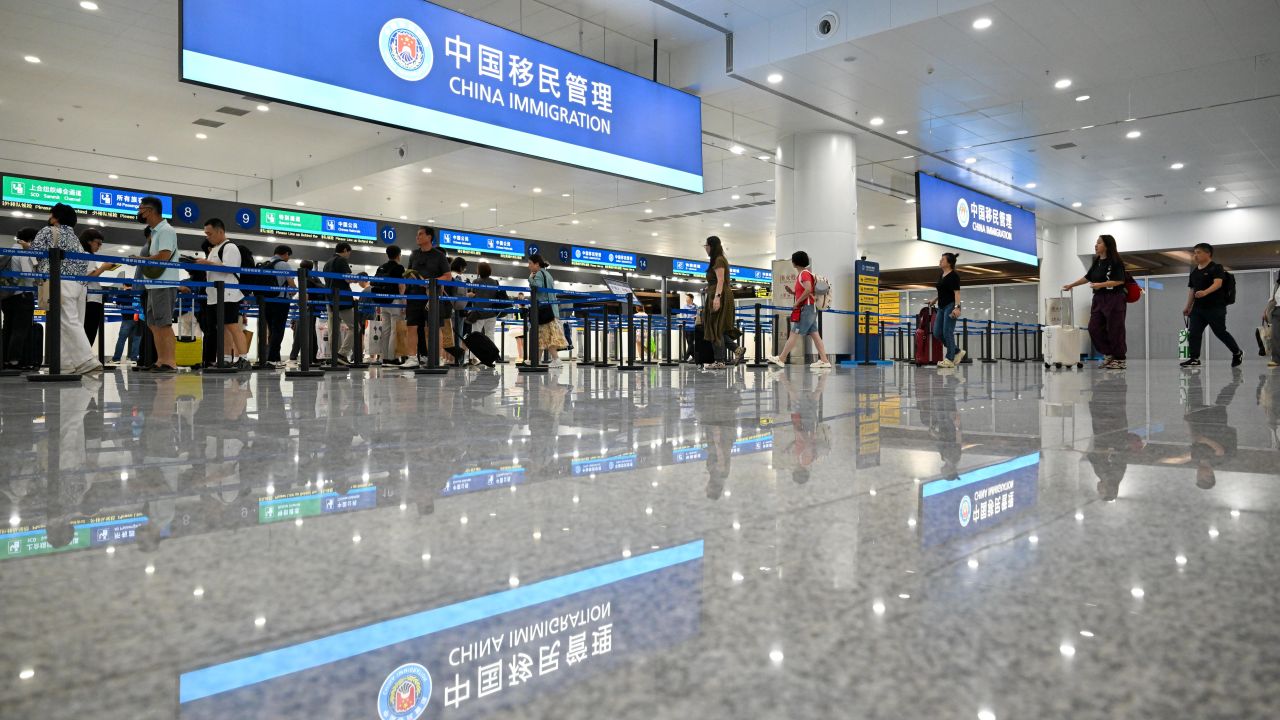
China’s new exit–entry rules place cross-border mobility within a widening architecture of national, industrial and technological security. Foreign nationals face exclusion from future entry; Chinese citizens face restrictions on departure; Taiwanese travellers occupy an unusually exposed jurisdictional position; and Japanese firms and researchers confront a growing overlap between ordinary commercial activity and national-security enforcement.
From Development-Led Opening to Security-Bounded Mobility
China’s new State Council Provisions on Exit and Entry Administration, scheduled to take effect on 15 September 2026, mark a significant reorganisation of Chinese openness. The nineteen-article measure links passport control, visa administration and border inspection more explicitly to export control, technology-transfer governance, sanctions enforcement and electronic-data inspection. Cross-border mobility is thereby incorporated into a wider system for governing information, technology, organisational affiliation and political risk.
The provisions take effect amid a parallel expansion of visa-free entry, transit facilitation and policies intended to increase inbound travel and consumption. Chinese immigration authorities present these initiatives as part of “high-level opening” and wider international exchange. The two policy directions operate simultaneously: entry is facilitated for tourism, business and other permitted exchanges, while mobility involving sensitive information, strategic technology, contested political identities or sanctions exposure is placed under tighter security control. China’s external opening is moving towards a differentiated, security-bounded model of circulation.
“Selective closure” captures this configuration more accurately than traditional isolation. China is widening selected channels of entry while strengthening the state’s capacity to interrupt entry or exit when security concerns arise. Immigration authorities may request documents, materials and electronic data when verifying identity and travel purpose, and false materials or statements may lead to denial of documents, entry or exit. Administrative judgement increasingly determines where openness ends and security control begins.
Foreigners May Be Kept Out; Chinese Citizens May Be Kept In
The provisions create a sharp asymmetry between foreign nationals and Chinese citizens. A foreign national who provides false materials or makes a false statement when applying for a visa or seeking entry at a port may be barred from entering China for one to five years. Comparable restrictions may follow punishment for obstructing border administration, fraudulently obtaining travel documents or entering or leaving illegally. Individuals covered by Chinese countermeasure regimes may also face refusal of documents or entry.
For executives, scholars, journalists and technical specialists, a five-year ban can sever access to factories, partners, archives, field sites, clients, conferences and family networks. China’s continuing importance to corporate strategies and research agendas gives such exclusion consequences far beyond tourism.
Chinese citizens face a more immediate form of control. Administrative detention for fraudulently obtaining exit–entry documents or for illegal exit or entry may be followed by a departure ban of six months to three years. Citizens engaged abroad in unlawful or criminal activities deemed harmful to national security and national interests may face the same restriction after returning.
The most consequential provision concerns violations of export-control or technology import–export rules that may endanger national industrial or technological security. Commerce and other competent authorities may prohibit departure, and the text specifies no maximum duration. Foreigners may thus be kept out; Chinese citizens may be kept in. Such restrictions can affect overseas employment, education, family reunion, professional relocation and participation in international networks.
The technology-security provision extends industrial policy into the governance of people. Competition in semiconductors, artificial intelligence, advanced manufacturing, telecommunications, aerospace and dual-use technology depends on tacit knowledge carried by engineers, laboratory directors, managers and supply-chain specialists. Personnel-based exit restrictions could provide a means of controlling knowledge that document screening alone cannot capture.
Mobility also becomes part of China’s counter-sanctions strategy. Companies complying with export controls imposed by Japan, the United States or the European Union may encounter Chinese countermeasures. Employees can then stand at the intersection of competing legal regimes, with personal movement increasingly exposed to geoeconomic conflict.
Uncertainty as a Method of Control
The provisions’ strongest effect may appear before any formal border decision. Terms such as national security, national interests, industrial security, technological security and potential harm leave substantial room for administrative interpretation. “False statement” has similarly broad practical significance. Clear cases involve forged documents or fabricated identities; more ambiguous cases may concern incomplete descriptions of employment, institutional affiliation, research activity, government connections or access to technology.
Authorities generally provide written notice of the facts, reasons, legal basis and avenues of remedy behind an exit prohibition. National-security concerns or possible effects on a criminal investigation allow advance notice to be withheld. A traveller may discover the restriction only when attempting to leave, after flights, employment, family arrangements and business commitments have already been disrupted.
Predictability is central to meaningful openness. When legal boundaries become difficult to identify, companies and individuals respond by taking precautions. Senior executives may travel less frequently; sensitive data remain outside China; staff use dedicated devices with restricted access; meetings move to regional hubs; and local subsidiaries become more separated from global information systems. Universities narrow fieldwork, interviews and collaborative research.
The 2025 Wells Fargo case illustrated the organisational reach of a single exit ban. After managing director Chenyue Mao was prevented from leaving China, Wells Fargo suspended employee travel to the country. Chinese authorities later stated that Mao was required to cooperate with a criminal investigation. The restriction was lifted in September 2025, allowing Mao to return to the United States after several months. Even as a temporary episode, the case showed how an individual exit restriction could alter an institution’s travel policy and sharpen wider corporate concern over mobility risks in China. Formal enforcement can remain limited while uncertainty turns mobility from a stable expectation into a revocable permission.
Taiwanese Travellers: Jurisdictional Ambiguity and Limited Protection
Taiwanese travellers occupy a particularly exposed position. Under Taiwan’s constitutional and legal order, Taiwanese people are citizens of the Republic of China rather than nationals of the People’s Republic of China. Beijing applies a different classification. PRC regulations governing cross-Strait travel define residents of Taiwan as “Chinese citizens residing in the Taiwan region” and place their entry under a special framework that Beijing treats as domestic, centred on the Mainland Travel Permit for Taiwan Residents.
This unilateral classification creates uncertainty under the 2026 provisions. Several exit restrictions expressly apply to “Chinese citizens”, yet the text leaves their application to Taiwan residents unspecified. Beijing could rely on the special cross-Strait framework, interpret the category according to its sovereignty claim, or invoke national-security, criminal or other legislation.
The principal risk arises after entry. Refusal of entry leaves a traveller outside PRC jurisdiction; an exit restriction places the traveller inside that jurisdiction while diplomatic protection remains severely constrained. Taiwan has no formal embassy or consular representation in mainland China. Assistance depends on semi-official channels, administrative contact and the state of cross-Strait relations, while Beijing’s treatment of Taiwan as a domestic matter further narrows the scope for external intervention.
Taiwanese businesspeople, academics, journalists, former officials, political party staff, civil-society actors and military veterans face layered exposure. Political speech protected in Taiwan may acquire legal significance under PRC national-security narratives. Research on Chinese politics, the People’s Liberation Army, united-front activity, human rights or cross-Strait relations may attract scrutiny. Contact with foreign governments, media or think tanks can also receive a security interpretation detached from the original purpose of the exchange.
Technology professionals face an additional layer of risk. Taiwan occupies a central position in advanced semiconductors and in wider ecosystems of artificial intelligence, precision machinery, electronics, telecommunications and defence-related supply chains. Engineers and managers often possess tacit knowledge, supplier information, process expertise and commercial data. The linkage between exit restrictions and potential harm to industrial or technological security increases the strategic salience of such personnel.
Corporate responses are likely to include limits on travel by key staff, separation of sensitive functions from mainland subsidiaries and tighter controls over technical data. Universities may reduce fieldwork, while firms with long-established mainland operations may relocate critical functions. Cross-Strait exchange may continue in volume yet become narrower in social composition, more cautious in subject matter and more dependent on political screening.
Japan: When Business Information Becomes Security Information
Japanese nationals clearly fall within the category of foreign nationals, making the one-to-five-year entry-ban provisions directly relevant to visa and port applications involving alleged falsehoods. The larger concern arises from the interaction between the new provisions and China’s existing national-security enforcement.
The 2025 edition of Japan’s Diplomatic Bluebook recorded that seventeen Japanese nationals had been detained on national-security-related charges since May 2015, with five still detained at the end of 2024. These cases have become a persistent issue in bilateral diplomacy and a major source of concern for Japanese firms.
Japan’s exposure reflects the depth of Sino-Japanese economic integration. Trading houses, banks, automotive manufacturers, machinery producers, chemical companies, pharmaceutical firms, electronics groups and logistics providers maintain extensive operations in China. Employees routinely handle production figures, supplier lists, factory layouts, technical specifications, mapping data, geological information and market surveys.
Such material forms part of routine business information in most commercial settings. Under China’s security framework, commercial information can acquire national-security significance. The boundary between market research and intelligence gathering becomes difficult to identify as industrial policy, economic security and counter-espionage enforcement converge.
The new provisions reinforce this overlap. Visa statements and declared travel purposes can be scrutinised; countermeasure lists can affect entry; and export-control or technology-security concerns can shape mobility. Japanese companies following Japan’s security export-control system may face Chinese political or legal responses when corporate decisions restrict the transfer of sensitive equipment or technology.
Corporate engineers and managers can therefore become the human point at which two regulatory systems collide. Headquarters decisions may create mobility risks for employees visiting Chinese subsidiaries, suppliers or clients. Japanese universities face similar pressures because field research often requires interviews, surveys, mapping, archival work and local data collection. Even routine social, economic or environmental research may attract administrative attention.
Corporate adaptation will probably involve more meetings in third locations, dedicated travel devices, tighter data access and the relocation of sensitive functions to Tokyo, Taipei, Singapore or other regional hubs. These precautions reduce immediate personal risk while increasing organisational fragmentation and weakening the dense interaction that previously supported commercial trust.
The Chilling Effect Spreads
China’s 2026 provisions place international circulation more firmly within national-security governance. Capital, tourism, trade and selected expertise remain welcome, while movements associated with technology leakage, sanctions pressure, political opposition, transnational crime or foreign interference receive closer control.
The consequences extend beyond border administration. Companies will price mobility uncertainty into investment decisions, governments will refine travel advice and universities will narrow fieldwork. Taiwanese and Japanese firms are also likely to deepen regional diversification where key employees, advanced technology and sensitive data are involved.
Busy international terminals at major Chinese airports and expanding visa-free programmes may continue to signal openness, yet the substance of international engagement is changing. Foreign participation is becoming more transactional, corporate operations more compartmentalised, research more constrained and interpersonal trust more fragile. China remains deeply connected to the world, but through channels that are increasingly selective and tightly governed.
カテゴリー
最近の投稿
- 中国代表団の日本領土・北方四島訪問と迫りくる「米中露戦後秩序の構図」 トランプが「米中露首脳会談」提案
- フライング・タイガースに端を発する東アジアの歴史認識を巡る争い
- トランプが中露に石油精製製品の増産・供給を要請した結果、習近平の「米中露戦後秩序の構図」を強化か?
- 岩屋氏の中国に対する「日中共同声明の再確認提案」は無駄 習近平が何を狙っているのかをわかっていない
- 共産主義者を追い出す
- 習近平の「米中露戦後秩序の構図」は、日本を「新型軍国主義」と指摘することによって何を狙っているのか?
- The Flying Tigers and the Battle over Wartime Memory in East Asia
- WWⅡの同盟国・米中の敵国は日本 そこに潜む中国の恐るべき「新型軍国主義・日本とG2」構図
- Casting out the communists
- トランプ「中国は同盟国」発言は事前に習近平と調整 梯子を外された高市首相
RSS