

Reds under the bed
“We will cast out the communists, Marxists, and fascists.” – Donald Trump.
No one should ever underplay the terrible cost which communism as a governing system inflicted, and continues to inflict, on the populations of Russia, China, North Korea and others over the past century. But the real threat of significant communist activity in America has always been minimal. Republican politicians have a long history of calling their Democratic opponents communists as a way of rallying their base and establishing their own patriotic credentials. For those in the rest of the developed world, the usage of the word seems laughable: in America, supporting universal healthcare is enough to have your opponent call you a communist. With little going well for Trump as he approaches the mid-term elections, he has fallen back on these worthless accusations to try and rally his ever-shrinking base to stop the likely Democrat wave which is coming in the November vote.
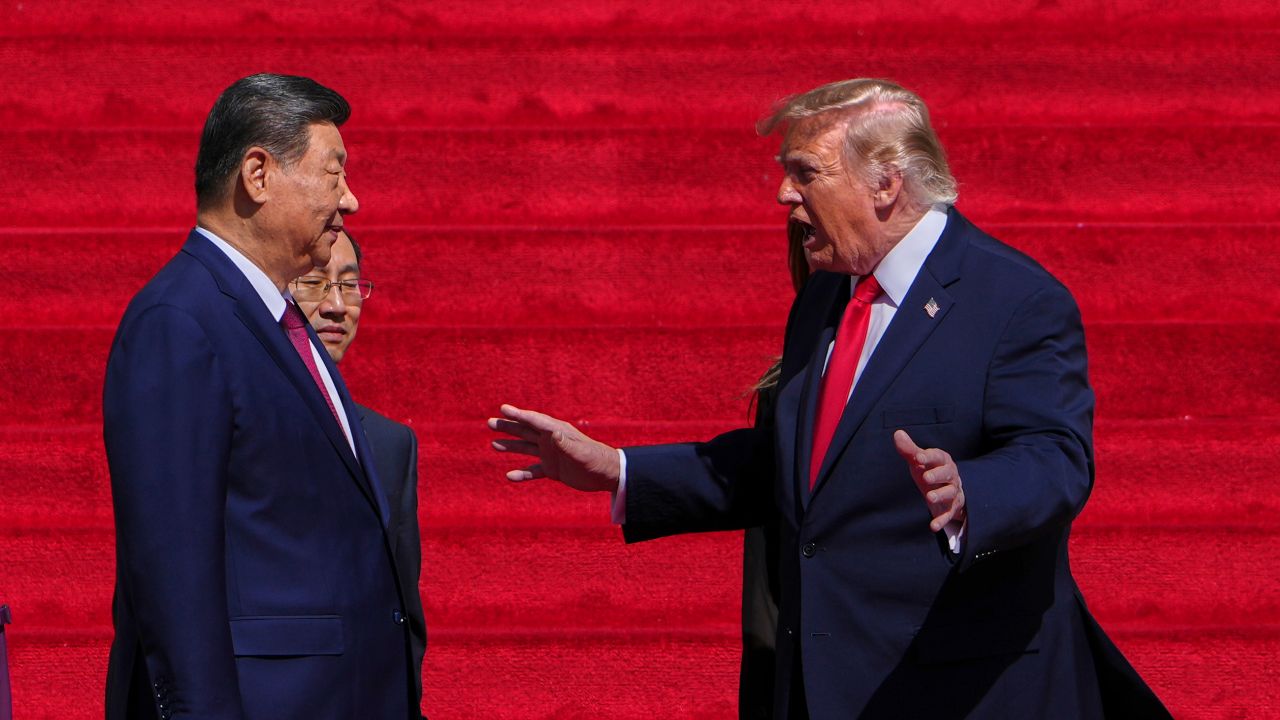
Trump’s concern about casting out the communists and Marxists (ironically much of Trump’s and Xi’s domestic agenda is remarkably fascist in nature, not that either would ever admit to it) is a well-ploughed furrow, but it comes less than a week after Trump rolled out a particularly luxurious red carpet for the General Secretary of the Communist Party of China, Xi Jinping. He really is a communist and a Marxist, because if nothing else he keeps saying he is. This, though, is lost on Trump: he sees Xi as a strongman leader, someone he wants to emulate, someone who (at least in Trump’s mind) has unlimited power and has absolute control over his country. It is Trump, Xi and Putin who are the world’s great leaders, with Trump being first, of course; he can never be second in his world view. Other lesser dictators and authoritarians too are respected, but none can challenge these three.
Xi’s state visit to the States was the first in over a decade and reciprocates the visit Trump made in Beijing in May. State visits and leadership summits are part and parcel of good diplomatic relations, and stability between the USA and the PRC is important, but Trump seems to bend over backwards to welcome Xi. While Xi did not meet Trump on arrival at the airport, Trump welcomed Xi on the airport runway himself, a truly unprecedented gesture for a Chinese leader’s visit and one that has only occasionally happened in the last 80 years. The three-day Xi visit produced few meaningful results, and little of the trip was broadcast because Trump’s tantrum with a number of press outlets resulted in the usual press pool coverage of the President being restricted. That the sole outcome of the meeting is a period of stability between the countries is a very low bar. Tariffs remain high but manageable, and rare earth metals are being supplied but not as smoothly as the US side would want. Just like in May, Trump’s personal diplomacy has produced very little substance.
The Wall Street Journal reported mid-month that there is a steady flow of new deals around rare earth metals and other commodities which are being struck to limit dependence on China’s control of the rare earth metal supply and refining chain. That is an important step in a multi-year process. It was incredibly short-sighted of the US to allow China to gain the advantage it did in this area, but profits, not national security, drove the decisions that previously resulted in China’s chokehold over the sector. Reducing dependency on China and ensuring that China continues to supply the metals is important, but it is only one important but small part of the bigger China challenge.
What Xi has noticeably failed to do since the May meeting is provide any meaningful help in reining in Iran and opening the Strait of Hormuz. After the May meeting, Trump said that Xi would love to help and do whatever he could, but that is highly unlikely, so we are left with two possibilities: Trump didn’t understand what Xi said to him, or Trump just lied to boost his own position. Either possibility is a depressing outcome, but the reality is that four months on, China has done little to help America, but it has continued to support Iran, a longtime partner. Iran’s military has not been destroyed, as Trump has repeatedly said, and continues to build drones and target US bases and ships across the region. A rough rule of thumb in modern warfare is that if drones are involved, then China is in the supply chain somewhere. Not providing fully assembled weapons but certainly providing component parts. It is also likely that China is not only providing material assistance to Iran but is providing detailed satellite images to help Iran target US bases. The whole picture becomes truly surreal: the PRC is actively assisting a country the USA is at war with to attack US service personnel, yet the President of the USA is personally welcoming the PRC’s leader at the airport, praising the strong relationship they have, and calling him a great leader!
A decade ago, Trump ran partly on a ticket of reducing the ballooning US national debt and taking on the China threat. Since then, the national debt has doubled, and Trump is hosting Xi for a state dinner while China actively supports Iran in a war against the US.
Does the US have a China policy?
Few state visits result in big wins for either side, and the Chinese side never publicly committed to helping America over Iran. So, setting aside the state visit and Trump’s menacing adverts, being tough on communists has nothing to do with being tough on China. It really begs the question of whether the US does have a China policy. China was perhaps the sole issue which could gain bipartisan support in Congress, but while many members of the House and Senate want to be tough towards China, there is simply no plan on what to do. Yes, there are significant tariffs against China, but way down from the headline figures of last year. Yes, there are limitations on chip exports, but there certainly isn’t consensus about this, especially from the leading chip manufacturers. But any pushback against Chinese economic coercion will only work if there is a coordinated effort by the US and its historical allies. As Trump has torched alliances and bullied Canada and Europe far more than Russia and China, it is not surprising that Canada and Europe remain open to Chinese exports, especially in the areas of EVs and clean energy. While Canada, Europe, South Korea and Japan all understand they have an American problem, the simple reality is that China does not solve that problem. Pax Americana is finished, and the traditional alliance structures will never again have the same level of trust in America as before, but China simply cannot replace America even at an economic level.
Firstly, it must be understood that Xi does not want to replace the US in the world order. Xi Jinping is certainly dreaming of China’s rise to global preeminence, but that does not mean replacing the US in the current world order. He sees China’s role very differently: preeminent but not the world’s policeman, not an active stakeholder in world affairs, but a more passive power unwilling to mediate or actively uphold the international norms which have held sway since the end of WW2. China and Russia are close but unequal partners; their common world view and goal is solely to weaken the global leadership role of the US, and to insulate themselves from any possible sanctions and coordinated pushback against them. To that end, they are delighted with Trump as President. Day by day, Trump weakens America’s standing in the world. Not only has he found himself bogged down in what is becoming a forever war in the Middle East, but he has severely weakened the alliance structures which made America such a dominant power.
Xi’s recent state visit to the US resulted in no victories for the US, but China did benefit by virtue of the US making so little or slow progress at challenging China. Xi has lots of things to worry about: the domestic Chinese economy remains sluggish at best. The debt situation in China is even worse than in America as local governments struggle to maintain basic services and wages in many parts of the country. The leadership is concerned about AI just as much as any government, and not only from a censorship standpoint. Xi’s primary concern is for the Party to retain power, and out-of-control AI would strike at the heart of that control. China may be a leader in green energy solutions, but it is also highly exposed to climate-related changes. From Xi’s standpoint, an America consumed by domestic concerns and one unable to work with traditional allies is the best he can hope for. Trump isn’t Making China Great Again, but nor is he pressuring China effectively. The past can’t be changed, but thinking through a counterfactual in US-China relations is instructive. A US president who had built on the tariff work and China-focused restrictions of both the Trump 1 and Biden presidencies could have brought together a broad global coalition of developed and developing countries to tackle Chinese dumping of low-cost consumer goods and high-tech EVs, bottlenecks in rare earth elements, and other areas of Chinese economic coercion. Instead, China faces not an alliance of countries with common concerns, but a group of countries struggling to find economic lifelines in a post-American age.
Hong Kong Coda
One place where the communists are certainly not being cast out is Hong Kong. Hong Kong presents a confusing picture to many observers. Its capital markets are booming after a period of stagnation. It has already seen over 1 trillion CNY of dim sum and panda bonds issued this year. It is still attracting big-name issuers like the fast-fashion retailer Shein, although the shares have fallen dramatically since its IPO. Yet amongst this capitalist bonanza of business, the Hong Kong government released its first-ever five-year plan to align itself with the Mainland. A place which for decades was named the world’s freest economy by the Heritage Foundation now issues five-year plans.
Hong Kong remains perhaps not an international financial centre, but it is the PRC’s international financial centre. It provides a controlled connection to international financial markets without breaking down the capital control firewalls which insulate the domestic economy and the Communist Party.
But across the harbour in West Kowloon, the three leaders of the annual June 4 remembrance vigil, Chow Hang-tung, Lee Cheuk-yan, and Albert Ho, were receiving sentences of between five and seven years and three months for inciting subversion. The court admitted in the ruling that the group neither involved violence, the threat of violence, nor a timetable or plan to implement their goal of ending one-party rule within the Mainland. Whatever Hong Kong is, the simple formulation that Hong Kong is back to normal is false.
Another sad irony is that during the Hong Kong protests of 2019, the protestors often looked to the USA and Trump as being able to help them push back against both the Hong Kong and PRC governments. The US did take some actions in that direction, but those days seem a distant memory now. Trump is perhaps the best President the communists could have wished for.


Privatizing China: Inside China's Stock Markets
by Fraser J. T. Howie (Author), Carl E. Walter (Contributor)

Red Capitalism: The Fragile Financial Foundation of China's Extraordinary Rise
by Carl Walter (Author), Fraser Howie (Author)
カテゴリー
最近の投稿
- 中国代表団の日本領土・北方四島訪問と迫りくる「米中露戦後秩序の構図」 トランプが「米中露首脳会談」提案
- フライング・タイガースに端を発する東アジアの歴史認識を巡る争い
- トランプが中露に石油精製製品の増産・供給を要請した結果、習近平の「米中露戦後秩序の構図」を強化か?
- 岩屋氏の中国に対する「日中共同声明の再確認提案」は無駄 習近平が何を狙っているのかをわかっていない
- 共産主義者を追い出す
- 習近平の「米中露戦後秩序の構図」は、日本を「新型軍国主義」と指摘することによって何を狙っているのか?
- The Flying Tigers and the Battle over Wartime Memory in East Asia
- WWⅡの同盟国・米中の敵国は日本 そこに潜む中国の恐るべき「新型軍国主義・日本とG2」構図
- Casting out the communists
- トランプ「中国は同盟国」発言は事前に習近平と調整 梯子を外された高市首相
RSS