

From Ethnic Governance to Compulsory Identification
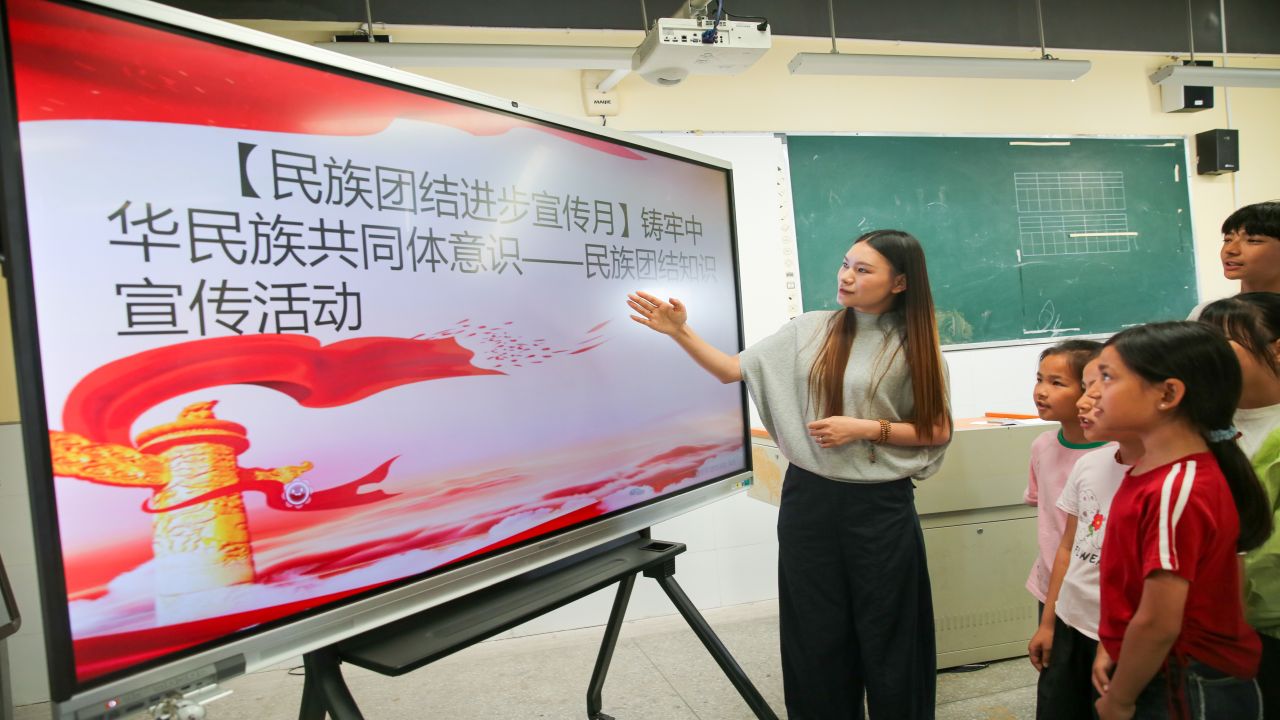
When China’s Ethnic Unity and Progress Promotion Law took effect on 1 July 2026, one question immediately arose in Taiwan: is this another law aimed at Taiwan? Judged by the structure of the law, the answer is no. The core of the law is not Taiwan. It lies in China’s domestic ethnic governance, the integration of minority regions, and Beijing’s increasingly prominent emphasis on “the consciousness of the Chinese national community.” Article 1 defines the law’s purpose as promoting ethnic unity and progress and strengthening consciousness of the Chinese national community. Article 6 further states that this consciousness is the foundation of ethnic unity, and prohibits acts that undermine ethnic unity or create ethnic separatism. Such language points first to Xinjiang, Tibet, Inner Mongolia, and other arenas of ethnic governance inside China, rather than to Taiwan alone.
Yet Taiwan is not absent from the law’s political imagination. Article 21 refers explicitly to cross-Strait economic and cultural exchanges, the strengthening of Taiwanese compatriots’ sense of belonging, identification and honour toward the Chinese nation, and the idea that people on both sides of the Strait “belong to the same Chinese nation” and are “all Chinese.” Taiwan is therefore not the primary object of the law, but it has been placed inside Beijing’s larger project of national identity construction. If Taiwanese society reduces the law to a “Taiwan law,” it risks overreading the text and accepting Beijing’s framing too readily. If Taiwan dismisses the law as irrelevant, however, it risks underestimating Beijing’s attempt to connect Taiwan policy, national identity narratives, and legal responsibility.
A Different Legal Instrument from the Anti-Secession Law
The new law differs clearly from the 2005 Anti-Secession Law. The Anti-Secession Law is a sovereignty-deterrence law aimed directly at Taiwan. Its purpose is to oppose and check Taiwan’s secession from China by secessionists in the name of “Taiwan independence.” Article 8 provides legal language for Beijing to employ “non-peaceful means and other necessary measures” under certain conditions, including Taiwan’s separation from China in fact, major incidents entailing Taiwan’s separation, or the complete exhaustion of the possibility of peaceful reunification. Its function is to draw red lines, signal military deterrence, and legalise the conditions under which Beijing may use coercive measures against Taiwan.
The logic of the Ethnic Unity and Progress Promotion Law is different. It does not begin from military red lines, conditions for war, or a sovereignty crisis. Instead, it brings identity, education, media, cyberspace, family education, Hong Kong, Macao, Taiwan, overseas Chinese communities, and legal responsibility into a single governance framework. If the Anti-Secession Law warns Taiwan not to move toward independence, the Ethnic Unity and Progress Promotion Law sends a broader message to communities inside and outside China: refusal to accept Beijing’s definition of the Chinese nation may itself become politically suspect. This marks a shift from anti-secession to compulsory identification.
Article 63 and the Problem of Long-Arm Legal Claims
The most troubling part of the law is Article 63, which creates an extraterritorial claim of legal responsibility. It provides that organisations and individuals outside the territory of the People’s Republic of China may be held legally responsible if they are deemed to have acted against China by undermining ethnic unity and progress or creating ethnic separatism. The problem is not only whether China can formally enforce the law abroad. The deeper concern is that the provision externalises the political vocabulary of China’s internal ethnic governance. Vague concepts such as “undermining ethnic unity and progress” and “creating ethnic separatism” may become tools of cross-border pressure.
Such a design can generate a chilling effect. Scholars, journalists, non-governmental organisations, religious groups, overseas Chinese associations, Uyghur and Tibetan organisations, Hong Kong advocates, and Taiwanese citizens may all face the risk of being labelled as forces that undermine ethnic unity or create ethnic separatism because of research, public speech, international advocacy, collective activities, or social media content. Chinese law has no legitimate jurisdiction over Taiwan, and foreign courts may not recognise such legal claims. Yet real-world risks often arise outside formal courts: visa denials, entry restrictions, transit through Hong Kong or Macao, police cooperation in third countries, online harassment, or pressure on relatives inside China.
Pressure on Exiled Communities and Host States
The law’s spillover effects may appear first not in Taiwan itself, but in countries around China that host, detain, monitor, or serve as transit points for exiled communities. Uyghurs, Tibetans, and other groups fleeing China have long used routes through Nepal, India, Thailand, Malaysia, Turkey, and Central Asian states to seek asylum, move onward to third countries, or build overseas advocacy networks. These communities often advance claims involving ethnic autonomy, religious freedom, human rights, or national self-determination. Beijing has long treated such claims as sensitive political challenges.
The new legal language may make it easier for Beijing to describe exiles’ political advocacy, religious activities, cultural preservation, public protests, or international lobbying as conduct that damages ethnic unity and progress or creates ethnic separatism. Neighbouring states may therefore face greater diplomatic and security pressure. Decisions over whether to admit Uyghur or Tibetan asylum seekers, permit public assemblies, allow meetings with foreign diplomats, or resist Chinese deportation demands may be reframed by Beijing as issues of ethnic unity and anti-separatism.
Thailand’s deportation of Uyghurs has already shown that such pressure is not abstract. When host states are caught between international human rights obligations, Chinese diplomatic pressure, economic interests, and domestic security calculations, exiled communities often become the most vulnerable actors. The Ethnic Unity and Progress Promotion Law may not immediately produce high-profile overseas trials. More likely, Beijing may expand its cross-border governance through visa denials, diplomatic protests, police cooperation, deportation requests, pressure on overseas associations, online harassment, and pressure on relatives inside China. The legal form matters because Beijing can package what was once political pressure as the enforcement of domestic law.
Why Japan and Taiwan Should Not Look Away
The implications of this law extend beyond Taiwan, the United States, and Europe. Japan also has strong reasons to pay attention. Japanese universities, media organisations, think tanks, human rights groups, and members of parliament frequently discuss Taiwan, Hong Kong, Xinjiang, Tibet, religious freedom, and China’s coercive diplomacy. If Chinese legal language frames overseas speech or advocacy as a threat to ethnic unity, pressure may spread further into academic exchange, exiled communities, and civil society. The real danger is not that Chinese law will replace Japanese law. The danger is more subtle: higher travel risks, institutional self-censorship, pressure on students and scholars from China, and greater caution among media and research institutions over China access, visas, funding, and personal safety.
Taiwan’s response should avoid two extremes. One is to describe the law in alarmist terms as a new Taiwan-specific law. The other is to treat the law lightly simply because it is not aimed solely at Taiwan. A more accurate reading is that the law belongs to China’s expanding toolkit of legal warfare, identity politics, and transnational coercion. Taiwan appears in the law, but the political logic of the law is broader than Taiwan. It is necessary for the Taiwanese government to reject Beijing’s extraterritorial claim of legal responsibility. Further work is also needed: risk alerts, reporting channels for relevant cases, interagency coordination, consular assistance, and cooperation with democratic partners. Taiwanese citizens, scholars, journalists, NGO workers, religious actors, and overseas community leaders should be especially alert when travelling to China, Hong Kong, Macao, or third countries with close security cooperation with Beijing. Past public statements, social media records, and international advocacy may carry new risks in certain jurisdictions.
The Real Test: How the Law Is Used
The significance of this law lies not only in the text itself, but in how it is used. If the law remains declaratory, its political impact will be limited. If Beijing begins to cite Article 63 in cases involving overseas individuals or organisations, and uses it to justify sanctions, investigations, visa bans, deportation requests, entry risks in Hong Kong or Macao, or pressure on relatives inside China, the law will have moved from domestic ethnic governance into cross-border legal coercion.
Several developments deserve close attention: whether Hong Kong and Macao become high-risk sites; whether neighbouring states restrict Uyghur, Tibetan, Hong Kong, or Taiwan-related activities under Chinese pressure; whether overseas Chinese associations, campuses, and media spaces experience stronger self-censorship; and whether Japan, Taiwan, the United States, the European Union, Canada, Australia, and other democracies can coordinate responses to China’s extraterritorial use of domestic law. This is not a Taiwan law. It is broader and, in some respects, more troubling. Beijing is linking domestic ethnic governance, national unification narratives, overseas community management, and extraterritorial legal claims into a single framework. Taiwan does not need to panic. Japan and other democracies should not be complacent. The real concern is that China is trying to extend the legal and political boundaries of speech, identity, and advocacy beyond its own territory.
カテゴリー
最近の投稿
- 中国代表団の日本領土・北方四島訪問と迫りくる「米中露戦後秩序の構図」 トランプが「米中露首脳会談」提案
- フライング・タイガースに端を発する東アジアの歴史認識を巡る争い
- トランプが中露に石油精製製品の増産・供給を要請した結果、習近平の「米中露戦後秩序の構図」を強化か?
- 岩屋氏の中国に対する「日中共同声明の再確認提案」は無駄 習近平が何を狙っているのかをわかっていない
- 共産主義者を追い出す
- 習近平の「米中露戦後秩序の構図」は、日本を「新型軍国主義」と指摘することによって何を狙っているのか?
- The Flying Tigers and the Battle over Wartime Memory in East Asia
- WWⅡの同盟国・米中の敵国は日本 そこに潜む中国の恐るべき「新型軍国主義・日本とG2」構図
- Casting out the communists
- トランプ「中国は同盟国」発言は事前に習近平と調整 梯子を外された高市首相
RSS