

Anniversaries
This week marks a number of notable anniversaries. For the United States the fourth of July is of course Independence Day and marks 250 years since the signing of the Declaration of Independence. It should be a time of celebration across the whole country bringing Americans together to celebrate their history but with Trump’s hijacking of many events the country finds itself divided with many wanting to ignore any national level events and instead keep celebrations local amongst family and close friends. Although Trump has taken the shine off the day for many it is worth remembering how unique the foundation of the United States is, a country established not based on ethnic groups or background but on ideas. It has had a violent and far from perfect history, but it has been a place which has taken people from all over the world and they have become Americans. It has been a place which has attracted people from all over the world and allowed them to follow their dreams. The country is at a crossroads though, the current administration wants to turn it back on what has made the country thrive and prosper as it harks back to some idealized version of the past which never really existed. At the 250th anniversary it really is good luck America.
But this week also sees anniversaries in Hong Kong. 1 July 1997 was of course the handover date when sovereignty of Hong Kong and the New Territories returned to the People’s Republic of China. Throughout the 80s and especially after the Beijing massacre of 1989 the handover was of real concern to many in Hong Kong. What would become of the unique way of life created by the local and Mainland immigrant communities over the past hundred plus years? It was a place of refuge for thousands of Chinese who wanted to escape Communist rule in the Mainland and build a life for themselves and their families. Hong Kong was clearly a Chinese society, but it clearly wasn’t the Mainland. The promise of 50 years of continuity of Hong Kong people running Hong Kong and operating with a “high degree of autonomy” was signed into law under the Sino-British Joint Declaration and filed with the United Nations. Time would tell whether the One Country Two Systems model could actually work.
As the Hong Kong and PRC governments embraced 1 July as a time of celebration many groups in Hong Kong embraced it as the ideal date to protest against government policies and overreach. In 2003 a huge protest against a local security law, Article 23, was an unmistakable sign that all was not well in Hong Kong. Hongkongers thought 50 years of continuity meant what it said, nothing needed to change governance wise, it wasn’t broken so don’t fix it.
Since then, the PRC authorities have strangled Hong Kong civil society. In 2019 the handover day saw anti-extradition protestors storm the Legco, or parliament building. Producing scenes truly incredible in a place which for decades saw the population demeaned by the casual refrain that Hong Kong people are only interested in making money and not interested in politics. A year later the PRC imposed the National Security Law which was so broadly worded and poorly defined that it effectively closed down any political and civil action discussion within the territory. Since then, the Hong Kong government’s primary concern has been national security, i.e. clamping down on any dissent and protest against the local government and the national government. In 2024 they finally introduced their own domestic security legislation, the Article 23 provision from the basic law. No one protested publicly.
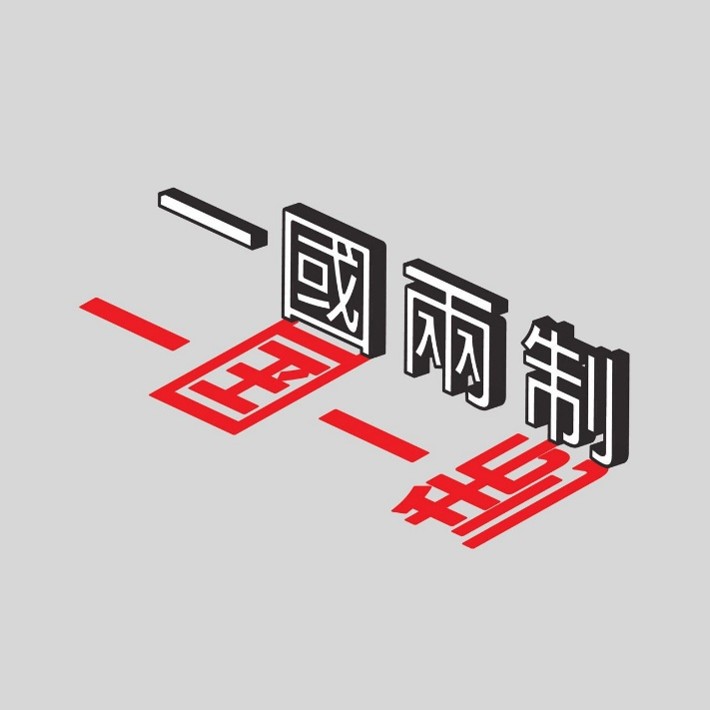
A graphic from the 2019 protests showing One Country Two Systems reflecting in red as One Country One System (simplified characters)
Source: Public doman
The New Normal
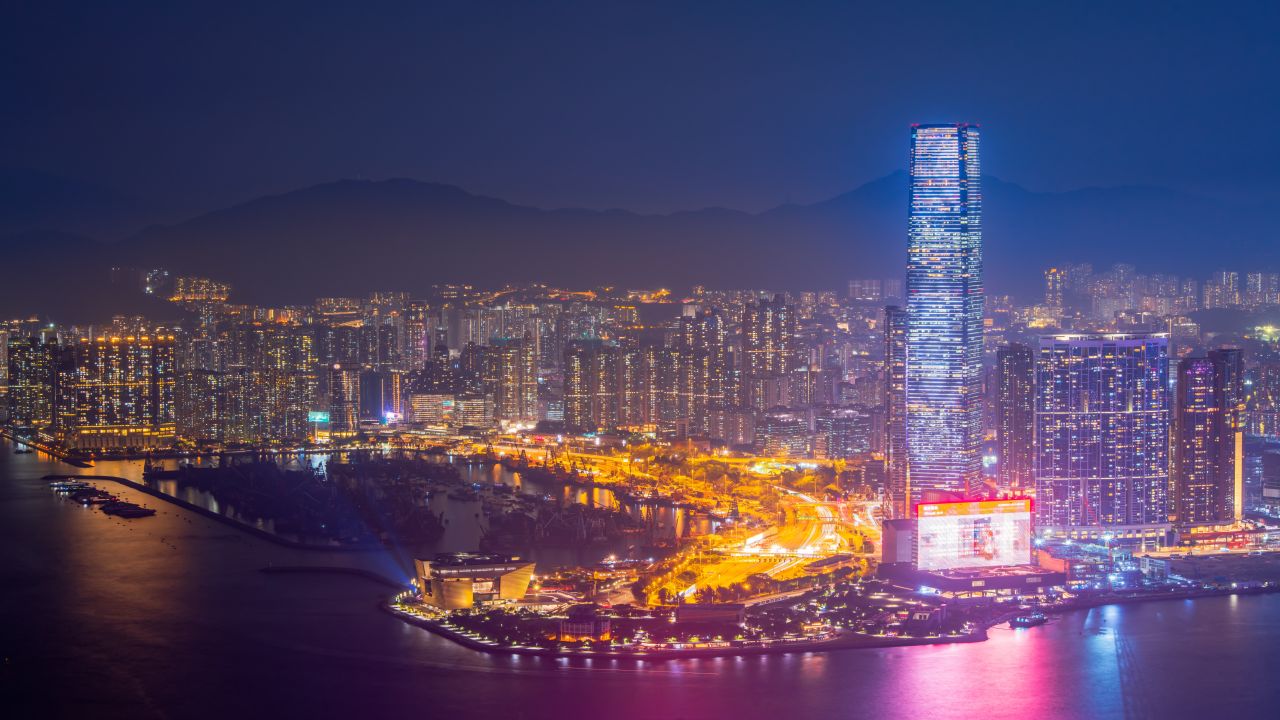
This isn’t the first time that this column has returned to the Hong Kong political and civil situation following the headline grabbing protests of 2019. Superficially Hong Kong has returned to normal. The cityscape remains dramatic, the people hardworking and friendly, and it continues to function as the gateway to China. Even as Chinese cities have internationalized Hong Kong still provides an ideal location for running a business from.
Yet the repression continues, no area of activity is beyond the remit of national security. Just last week the two owners of Hunter Books in Sham Shui-po, former Civic Party district councilor Leticia Wong along with a 32-year man was arrested and charged with sedition and money laundering. They pair have since been bailed but they, according to the filings, sold and displayed books which would incite hatred of the government as well as taking money from overseas political organizations. These very words sound frightening; you would think they were running a violent terrorist cell intent on causing mayhem in Hong Kong. But sadly this language is now common in Hong Kong and used repeated by the government to target anyone who would publicly disagree with them. According to reporting by the South China Morning Post the shop has previously drawn attention to itself by selling candles at HK$6.40 and displaying signs saying 35/5, or the 35th of May, a reference to the not to be spoken date of 4 June. The shop reportedly also sold a biography of Jimmy Lai, a Mainland born Chinese man who escaped to Hong Kong and built a clothing empire. Lai is the embodiment of the Hong Kong success story who should be lauded in Hong Kong instead is imprisoned. A grim anniversary passed last week as Lai passed his 2,000 day in custody. He was arrested on a slew of national security and fraud charges around his outspoken support for the 2019 protests both vocally and via his hugely popular newspaper the Apple Daily. Earlier this year he was sentenced to 20 years in jail which given his age, 78, is an effective life, or should that be death sentence. Pleas from his family for compassionate release have been repeatedly ignored. Many view the charges as spurious and he is in effect Hong Kong most famous political prisoner, but he is certainly not the only one.
Jimmy Lai has long been a thorn in the side of the Chinese Communist Party. At the time of the handover, he was the only tycoon to embrace the British legacy in Hong Kong and the opportunities it provided. While other tycoons pandered to the new incoming rulers from the North, Lai spoke positively of the British role in building Hong Kong and the importance of the rule of law and openness which were hallmarks of Hong Kong. Lai understood then in 1997 that Mainland China could never have offered the life he made for himself in Hong Kong. Lai continued to infuriate the CCP with his popular Apple Daily newspaper which offered a mix of trashy celebrity stories, nightlife reviews and importantly biting commentary and criticism of both the HK and national governments. He was a marked man from early days, and his imprisonment is less to do with justice and the rule of law than it is with revenge by the CCP.
Looking Ahead
Next year Hong Kong will mark 30 years since the handover and few expect any loosening of the security infrastructure. It will see the selection of a new Chief Executive. The current CE John Lee has been non-committal on whether he will stand for office again but failing him existing security chief, Chris Tang could well find himself favourite. There are no meaningful elections for the post. Candidates are picked by Beijing and confirmed by another hand-picked committee. But the name of the winner is secondary because it is national security which holds the top spot. No candidate can stand any chance of being appointed if they don’t make national security their cornerstone. The clampdown on booksellers, and anyone else trying to promote ideas, discussion and building a civil space will continue.
Hundreds of thousands of Hongkongers have left the city. Some because they directly fear for their safety while others just want to live and raise their families in a more open political environment. Some of those exiles, for that is the right word for many of them, remain engaged in highlighting the risks of CCP rule. They have experienced firsthand the clamp down in Hong Kong and are trying to use that experience to affect policy making in Canada, Australia, the UK, Europe and elsewhere. The Hong Kong experience isn’t an aberration or a mistake. The clamp down on Hong Kong isn’t just a result of the limited violence and vandalism of 2019, it is essential to the CCP’s role in engaging with minorities of those who express difference and don’t align with their views and values. That might seem peripheral to some but China’s economic rise, and willingness to use its economic might to try at least to bend countries to its will are intrinsically the same. The CCP demands obedience to their demands, political and economic, they don’t value or embrace differences.
The vibrant and fascinating city of Hong Kong should have been a treasured possession embraced by Beijing. Instead, the leadership has demanded that so much of what has made Hong Kong so special has needed to be erased. It a great loss to the people of Hong Kong and to Beijing although the leadership don’t yet realize it. The anniversaries of the United States and Hong Kong are very different but perhaps it is worth contemplating how America’s history has been one of embracing difference, yet for modern day China under CCP rule it has been about eradicating difference.


Privatizing China: Inside China's Stock Markets
by Fraser J. T. Howie (Author), Carl E. Walter (Contributor)

Red Capitalism: The Fragile Financial Foundation of China's Extraordinary Rise
by Carl Walter (Author), Fraser Howie (Author)
カテゴリー
最近の投稿
- 中国代表団の日本領土・北方四島訪問と迫りくる「米中露戦後秩序の構図」 トランプが「米中露首脳会談」提案
- フライング・タイガースに端を発する東アジアの歴史認識を巡る争い
- トランプが中露に石油精製製品の増産・供給を要請した結果、習近平の「米中露戦後秩序の構図」を強化か?
- 岩屋氏の中国に対する「日中共同声明の再確認提案」は無駄 習近平が何を狙っているのかをわかっていない
- 共産主義者を追い出す
- 習近平の「米中露戦後秩序の構図」は、日本を「新型軍国主義」と指摘することによって何を狙っているのか?
- The Flying Tigers and the Battle over Wartime Memory in East Asia
- WWⅡの同盟国・米中の敵国は日本 そこに潜む中国の恐るべき「新型軍国主義・日本とG2」構図
- Casting out the communists
- トランプ「中国は同盟国」発言は事前に習近平と調整 梯子を外された高市首相
RSS