

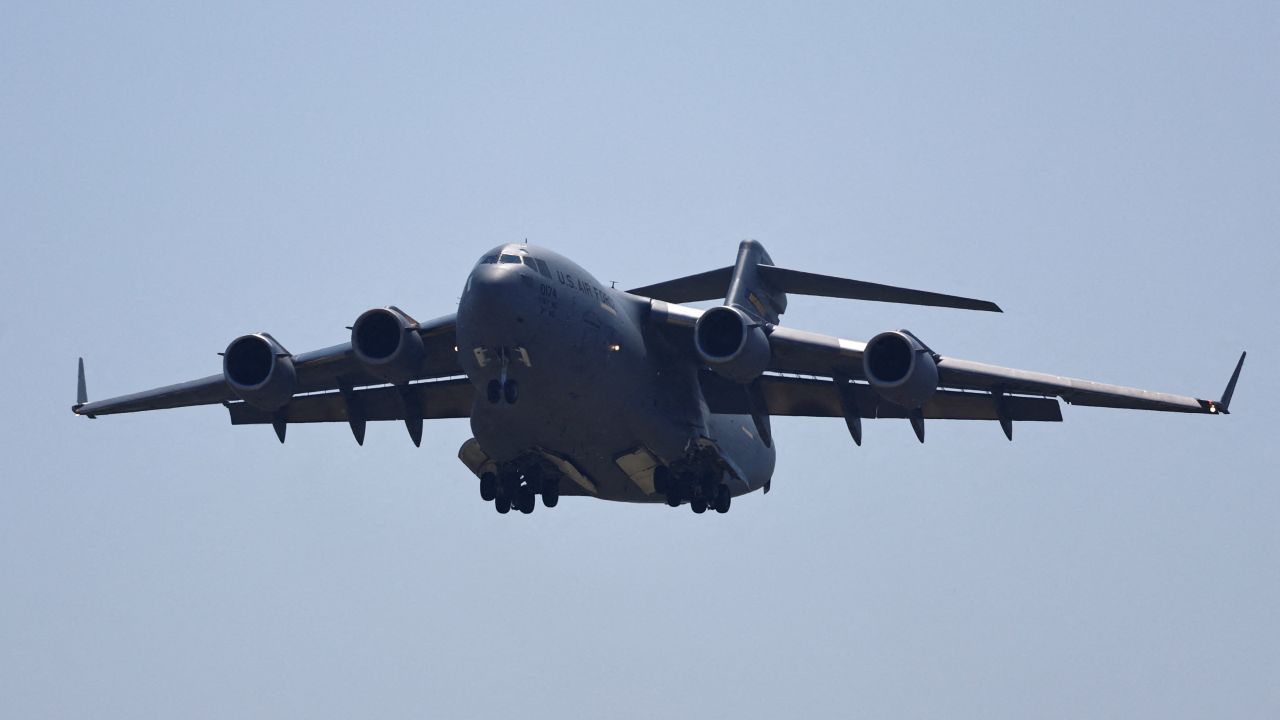
A Summit of Managed Rivalry, Not Reconciliation
President Donald Trump’s visit to Beijing should not be read as a revival of the older era of U.S.–China engagement. Nor should it be mistaken for a genuine reconciliation between the two powers. The more important question is whether Washington and Beijing are moving toward a new mode of managed rivalry: a relationship in which strategic competition is not resolved, but temporarily organized, contained, and selectively traded. The summit therefore matters less as a diplomatic breakthrough than as a test of how trade, technology, energy security, regional order, and Taiwan may be drawn into a wider bargaining framework.
The meeting comes at a moment when several issues are converging. Iran, trade, artificial intelligence, nuclear risk, rare earths, technology controls, Taiwan, and regional security are no longer separate files. They form a strategic package in which pressure in one area can become leverage in another. For Taipei, the concern is not whether the meeting produces dramatic announcements, but whether it normalizes a pattern of issue linkage that ties cross-Strait stability to tariffs, energy security, technology controls, and first-island-chain deterrence.
This is why foreign think-tank reports should be read as signals rather than conclusions. Washington policy circles tend to emphasize crisis management, alliance credibility, and deterrence. Chinese policy commentary, by contrast, stresses stability, mutual respect, and recognition of China’s “core interests.” Both languages are strategic. Neither should be consumed passively. From Taiwan’s perspective, the task is to decode what each side wants others to believe.
Iran, Energy Security, and China’s Reverse Leverage
The first major observation concerns the unfinished U.S.–Iran conflict. Trump enters Beijing not simply as a president pressuring China through tariffs, but as a leader seeking diplomatic relief from a war that has complicated America’s global posture. The Iran file changes the balance of the summit. In earlier phases of Trump’s China policy, tariffs were designed to create unilateral pressure: Washington imposed costs, Beijing responded, and Trump claimed negotiating advantage. But when the United States needs China’s cooperation to reduce Middle Eastern instability, the bargaining structure changes.
China is no longer merely the target of American coercion. It becomes a potential broker, spoiler, or selective stabilizer. Beijing understands this well. It does not want to appear as if it is enforcing American demands against Iran, since such a posture would weaken China’s image in the Global South. Yet China also has no interest in prolonged disruption in the Gulf, higher energy costs, or instability in global shipping.
This creates a paradox. The Iran crisis weakens Trump’s ability to present himself as negotiating from overwhelming strength, but it also gives him a reason to keep the U.S.–China channel open. For Beijing, the conflict provides leverage without requiring open confrontation. China can offer limited cooperation on Iran while seeking restraint from Washington on tariffs, export controls, or Taiwan. This is the practical logic of managed rivalry: the two sides compete structurally, but bargain tactically.
Tariffs, Technology, and Conditional Interdependence
The second observation concerns tariffs. Trump’s trade policy still relies on the familiar combination of carrots and sticks. Tariffs signal punishment; agricultural purchases, aircraft orders, energy deals, and temporary truces provide symbolic relief. Yet tariff relief, if it comes, should not be mistaken for a restoration of liberal globalization.
The older U.S.–China economic relationship rested on the belief that trade would generate mutual benefit, institutional predictability, and eventually political moderation. That world is gone. What is emerging instead is a political economy of conditional interdependence. Both sides still need markets, capital, commodities, technology, and supply-chain stability. But neither side treats interdependence as trust. Each treats it as leverage.
This is why any trade outcome from the summit will likely be tactical rather than strategic. Trump may want Chinese purchases that can be presented domestically as proof of his bargaining power. Xi may want greater predictability on tariffs and export controls in order to stabilize China’s economy and demonstrate resilience under pressure. Both leaders may claim success. Yet the underlying structure remains competitive. Rare earths, semiconductors, AI, shipbuilding, electric vehicles, and financial restrictions will continue to define the hard edge of U.S.–China rivalry.
From a Taiwanese perspective, economic bargaining is never purely economic. Once tariffs become a bargaining instrument, so too can investment screening, export controls, defense procurement, and regional security commitments. Taiwan’s semiconductor position gives it strategic value, but it also exposes Taiwan to the logic of transactional bargaining. The more Trump personalizes negotiation, the more Taiwan must ask whether institutional commitments remain stronger than presidential improvisation.
Leader Diplomacy and the Ambiguity of Transactional Bargaining
The third observation concerns leader-level diplomacy. Reciprocal visits and direct talks may create an image of stabilization. They establish a visible channel, reduce the risk of miscalculation, and allow both governments to claim that they are responsibly managing the world’s most consequential bilateral relationship. But leader diplomacy also carries risks, especially when structural issues are personalized.
Trump’s diplomatic style privileges direct bargaining, symbolic gestures, and leader-to-leader chemistry. Xi’s diplomatic style emphasizes hierarchy, respect, and recognition of China’s core interests. These styles can produce short-term calm, but they can also create ambiguity. What exactly has been promised? Which issues have been linked? Which understandings are rhetorical, and which will shape policy?
This is why the summit should not be judged by atmosphere. A warm handshake, ceremonial hospitality, or even a successful joint announcement may say little about the deeper direction of U.S.–China relations. The true measure is whether the United States maintains its institutional commitments after the summit: export-control discipline, alliance coordination, Taiwan defense support, and first-island-chain deterrence.
Beijing appears to understand this moment as an opportunity to stabilize competition rather than restore the old relationship. The previous U.S.–China framework, built around trade-led engagement and strategic ambiguity, has already changed. China’s more realistic objective is to reduce immediate pressure, maintain leader-level access, and secure greater recognition of its core interests, especially on Taiwan and technology.
This does not mean China is unconstrained. Its economy faces structural difficulties, foreign investors remain cautious, and U.S. technology restrictions continue to matter. But Beijing’s confidence now comes from comparative resilience. It believes it has survived tariff escalation, adapted to technology pressure, strengthened its control over critical minerals, and expanded its diplomatic room in the Global South. In Chinese strategic thinking, endurance itself becomes leverage.
Taiwan, the First Island Chain, and the Risk of Strategic Downgrading
The most important implication for Taiwan concerns its place in the first island chain. The issue is not whether Taiwan appears on the U.S.–China agenda; it always does, explicitly or implicitly. The more serious question is whether its position within Washington’s strategic hierarchy may be gradually reclassified. Is Taiwan still treated as a democratic partner, a security node, and an indispensable part of Indo-Pacific deterrence? Or is it being reframed as one sensitive issue among many in a wider U.S.–China bargain?
This distinction matters. Arms sales to Taiwan are not merely commercial transactions. They are signals of commitment, instruments of deterrence, and indicators of whether Washington continues to treat Taiwan as a security partner rather than a bargaining item. The danger is not necessarily dramatic abandonment. The more plausible risk is gradual downgrading: slower arms deliveries, smaller packages, softer language, delayed high-level exchanges, reduced emphasis on first-island-chain coordination, or a U.S. desire to avoid “provoking” Beijing while seeking cooperation on Iran or trade. Strategic weakening often begins not with betrayal, but with postponement.
Diplomatic language is equally important. If Washington moves from “not supporting Taiwan independence” toward “opposing Taiwan independence,” or if it appears to endorse “peaceful unification,” the effect would be significant. Such wording may appear minor to casual observers, but in diplomacy words accumulate. Formulae become precedents. Precedents shape expectations.
Taiwan is also not only a cross-Strait actor. It sits within a wider maritime security structure linking Japan, the Ryukyus, Taiwan, the Philippines, and the South China Sea. If Washington softens its regional posture while seeking Chinese cooperation on Iran, the consequences would extend beyond Taipei. Japan, the Philippines, South Korea, and Southeast Asian states would all reassess American reliability. This is why the post-summit indicators matter: Are military exercises sustained? Are arms deliveries accelerated? Are regional partners reassured? Does U.S.–Japan–Philippines coordination continue? Or does Washington enter a more cautious phase in order to preserve a fragile understanding with Beijing?
More broadly, the summit illustrates a key feature of contemporary great-power competition: it no longer operates through a clean division between confrontation and cooperation. Instead, it increasingly works through issue linkage. Energy crises affect Taiwan policy. Tariff negotiations shape technology controls. AI safety dialogue influences strategic trust. Rare earths affect defense production. Iran affects Indo-Pacific bandwidth. Taiwan must therefore be understood within this web of linked bargaining, not as an isolated issue.
Trump’s China visit may produce limited success: trade purchases, temporary tariff relief, language on Iran, AI, fentanyl, nuclear risk, or a steadier rhythm of leader-level meetings. But none of this would amount to reconciliation. It would be a mechanism for preventing competition from becoming immediately uncontrollable. The future of U.S.–China relations will likely be neither a pure new Cold War nor a return to engagement, but a managed rivalry shaped by transaction, deterrence, selective cooperation, and mutual suspicion.
Strategic calm is therefore essential. The real test is not whether the summit produces reassuring words, but whether Taiwan’s strategic value remains institutionally anchored after the meeting. A temporary easing of U.S.–China tensions may lower the temperature, but it will not remove the underlying structural rivalry. The future will not be decided by one summit in Beijing. It will depend on whether Taipei can remain an indispensable node in semiconductors, maritime security, and Indo-Pacific democratic resilience, rather than merely another sensitive item in U.S.–China diplomacy.
カテゴリー
最近の投稿
- 中国代表団の日本領土・北方四島訪問と迫りくる「米中露戦後秩序の構図」 トランプが「米中露首脳会談」提案
- フライング・タイガースに端を発する東アジアの歴史認識を巡る争い
- トランプが中露に石油精製製品の増産・供給を要請した結果、習近平の「米中露戦後秩序の構図」を強化か?
- 岩屋氏の中国に対する「日中共同声明の再確認提案」は無駄 習近平が何を狙っているのかをわかっていない
- 共産主義者を追い出す
- 習近平の「米中露戦後秩序の構図」は、日本を「新型軍国主義」と指摘することによって何を狙っているのか?
- The Flying Tigers and the Battle over Wartime Memory in East Asia
- WWⅡの同盟国・米中の敵国は日本 そこに潜む中国の恐るべき「新型軍国主義・日本とG2」構図
- Casting out the communists
- トランプ「中国は同盟国」発言は事前に習近平と調整 梯子を外された高市首相
RSS