

The Upheaval
Since the return of Donald Trump to the White House this column, while primarily focused on China has closely followed the dramatic and lasting changes which Trump’s administration has conducted both domestically and internationally. Those changes have brought real world damage to America’s standing in the world. Trump has turned on traditional European allies and friendly states across the world. Often there is a kernel of truth in the form of the attack. European states clearly needed to carry more of their own defence costs, yet Trump’s approach was to threaten NATO allies and most recently effectively declared the alliance dead.
There is no need to restate all the ups and downs of the past 14 months. Trump has taken on the world, and this column has warned that there is no going back to what came before. The world has entered a new and dangerous period where the US, which was once the anchor of the post WW2 international order, has become a revisionist, if not rogue power. The question is whether China is an automatic beneficiary of the US decline. That is far from clear, and China faces many headwinds both internally and an unwillingness internationally to lead a new global order. China does make global claims yet much of its activities have been merely to complain about the US led order rather than offering a genuine alternative.
The View from Singapore
Singapore has benefited as much as any country from the stability and growth of Pax Americana and have always been cautious of trying walk a thin line between global and regional powers much bigger and powerful than the tiny city state. Drawing lessons from Singapore can often be somewhat foolish given the small physical size of the country and the small population. What can work in Singapore is often simply not applicable to large countries with rural and urban environments with much larger populations. But Singapore’s government is very aware of their success being built on the rise of international agreements and good global order.
This week the Singapore Minister for Foreign Affairs, Dr Vivian Balakrishnan was interviewed by Reuters Global Managing Editor for World News Mark Bendeich. The entire interview which is worth reading but two questions and answers are particular pertinent and worth quoting at length.
Reuters: Is the US any longer a reliable, steady partner?
Minister: The US is now a revisionist power. For 80 years, the US was the underwriter for a system of globalisation based on UN Charter principles, multilateralism, territorial integrity, sovereign equality. It actually heralded an unprecedented and unique period of global prosperity and peace. Of course there were exceptions. And of course, the Cold War was still in effect for at least half of the last 80 years. But generally, for those of us who were non-communists, who ran open economies, who provided first world infrastructure, together with a hardworking disciplined people, we had unprecedented opportunities. The story of Singapore, with a per capita GDP of 500 US dollars in 1965. Now, [it is] somewhere between 80,000 to 90,000 US dollars. It would not have happened if it had not been for this unprecedented period, basically Pax Americana and then turbocharged by the reform and opening of China for decades. It has been unprecedented. It has been great for many of us. In fact, I will say, for all of us, if you look back 80 years. But now, whether you like it or not, objectively, this period has ended. There is no point trying to assign blame or pejorative adjectives. That is not helpful. Basically, the underwriter of this world order has now become a revisionist power, and some people would even say a disruptor. But the larger point is that the erosion of norms, processes, and institutions that underpinned a remarkable period of peace and prosperity; that foundation has gone. What you are seeing now, whether you watch the war in Ukraine, in the Middle East or elsewhere, including in Asia, to me these are symptoms of the underlying tectonic rupture. Big powers and even lesser powers have a more narrow definition of national interest. [They] are willing to weaponise all levers in their hands. You look at the weaponisation of currency, weaponisation of technology, weaponisation of critical minerals, weaponisation of trade interdependency, which were supposed to keep us at peace with one another- now it becomes yet another portal for exploitation. You end up with a world in which strategic trust has dropped. Everyone has to assume the worst. You are more likely to assign nefarious motives towards others, even when in fact, they are just trying to take precautions and engage. So just trying to take the world as it is, rather than trying to assign blame or to use pejorative adjectives.
Source: https://www.mfa.gov.sg/newsroom/press-statements-transcripts-and-photos/transcript-of-minister-for-foreign-affairs-dr-vivian-balakrishnan-s-interview-with-reuters-global-managing-editor-for-world-news-mark-bendeich–23-march-2026/
This is remarkably direct language from a Singaporean government minister. Singapore never likes to take sides, and it is clearly avoiding assigning blame but as a small nation it must operate in the world it finds itself and as the minister says, the period of Pax Americana has ended. It is from that position Singapore must now try and find a role.
If then America is no longer the global order anchor is China, then a suitable partner or replacement for the role the US once took? That was the next question.
Reuters: Where does Singapore look now, for a partner? China?
Minister: No. Let us get back to basics. As I said, what has not changed for Singapore: we are small, with no natural resources, certainly no energy. We are still trade dependent. If you measure the stock of FDI in Singapore, the United States is number one, by orders of magnitude. If you look at trade, China is our biggest trading partner [in goods]. The United States is our biggest trading partner in services. If you look at investments and you ask the Chinese, very often, they will tell you that Singapore has been a large source of FDI into China for the past dozen years. You have to verify that with the Chinese themselves. Is it in our national interest to be forced to choose sides? I do not think so. We have to be relevant, to be useful, but not being used by either side. In other words, from time to time, Singapore will have to say no to the United States or to China. But it must be very clear that when we say no, it is not done at the behest of the other but done after a careful computation of our own long term national interest. Now to the extent that we can manage a constructive, honest relationship with both, we have to do our best to maintain it. That gives us strategic choice, strategic autonomy. To be fair to both America and China, neither side is stridently banging the table and saying, choose and choose now.
The interview echoes some of the points made by Canada’s Mark Carney earlier in the year at Davos. Carney was more dismissive of the benefits of Pax Americana whereas Singapore doesn’t shy away from embracing what has been a remarkable period of growth and stability for much of the world. But in both cases, there is a clear understanding that that old order has passed and new rules, whatever they may be are going to operate.
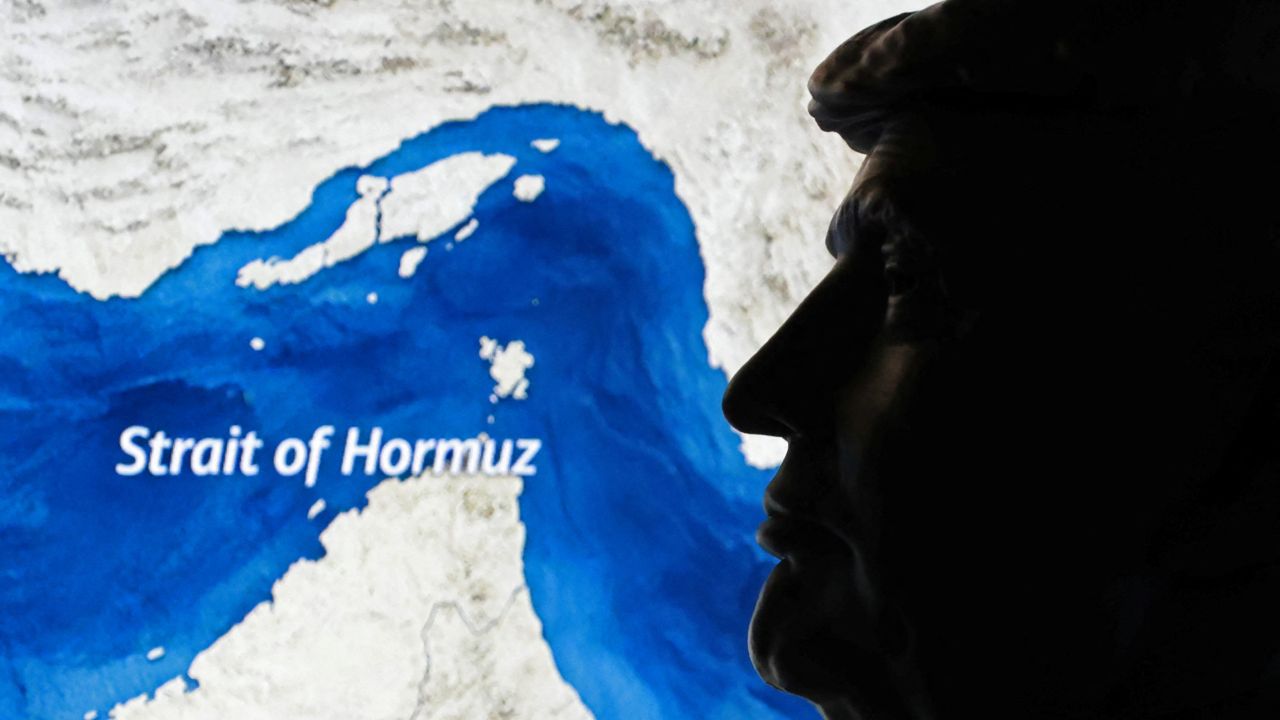
Singapore, like most Asian countries, is highly dependent on middle eastern hydrocarbons and are suffering not only price hikes but supply concerns. America has started the Iran war with minimal thought about the knock-on effects, and they seem to have completely discounted the threat of the closure of the Straits of Hormuz which Iran has now imposed. Singapore although in no position to dictate or influence outcomes of the ongoing war has almost certainly given far more thought to the various impacts of supply disruption than the Trump administration has done. The recklessness of America has won it no friends in Asia. Last year the (illegal) tariffs caused havoc to Asian export economies, now the all too predictable closure of the Straits of Hormuz has left countries counting the days till their oil runs out and to cap it all US military assets in the region, there to defend against a real nuclear power, are being redeployed to the middle east.
Quo Vadis?
What comes after the period of Pax Americana just isn’t clear. How can it be yet? The war in Iran might finish this week, next month or it could still be months away. Trump has set no goals so it isn’t even clear what victory is although by the day it seems more likely that the Iran Islamic Republic will not fall and that when hostilities eventually cease they find themselves with fewer sanctions imposed on them and in direct control of the Straits of Hormuz, which has previously been an international waterway allowing free passage to all.
But as Minister Balakrishnan makes clear, assume the worst. Big powers, and others, are likely going to take a narrower, more nationalistic world view of state-to-state relations. Confrontation, not cooperation may become the norm. If nothing else trust in the US has evaporated both in the developed and developing world yet the irony here is that in this new world order it will be impossible to turn away from the world’s largest two economies. China as the world’s factory will remain so, and all indications are that they will continue on their mercantilist path because to move from that and rebalance their economy would require a redistribution of power and money within society and Xi Jinping is going to do nothing to effect that change. America will remain the world’s largest economy with the world’s largest companies and a key driver in technology, especially AI, and continue to benefit from the world’s most liquid and innovative financial markets. America has also shown again that even with Trump who campaigned on stopping wars and not being drawn into conflicts that the country it more than willing to use it military to change leaders and intimidate countries. As Balakrishnan says, the willingness of countries (like America) to weaponize all levers in their hands is frightening.
Only six years on from the Covid pandemic the world economy has been destabilized again but this time by a Trump made crisis. It has come as an unwelcome surprise that the world economy is so finely tuned and simply can’t handle shocks well. Perhaps one lesson which must be learnt is that countries must start to stockpile essential goods and commodities to provide a buffer for future shocks. Redundancy, excess capacity and multiple independent supply chains will need to be developed to let highly trade dependent countries weather the economic storms which will come. That is a world where economic returns will be lower, where (on paper at least) inefficiencies will be greater, but resiliency will be higher.
Even before Trump’s second term the Pax Americana era was under strain. China’s entry into WTO and its systematic abuse of the global trading system warped an already imperfect model. The global financial crisis further exposed weaknesses in the financial plumbing of the world economy. And Russia’s 2014 invasion of Ukraine which went largely unchallenged only prompted the later full scale invasion during Covid. All eras pass, and new rules and arrangements come about but seldom has the leading power been so active in causing its own demise. Pax Americana was not perfect but let us not make perfect the enemy of good. Singapore understood the benefits that the post WW2 era brought both in terms of economy growth and a more peaceful world. There is much to hold onto from the past 80 years even if the US, the primary architect and anchor of that order no longer values it.

Privatizing China: Inside China's Stock Markets
by Fraser J. T. Howie (Author), Carl E. Walter (Contributor)

Red Capitalism: The Fragile Financial Foundation of China's Extraordinary Rise
by Carl Walter (Author), Fraser Howie (Author)
カテゴリー
最近の投稿
- 中国代表団の日本領土・北方四島訪問と迫りくる「米中露戦後秩序の構図」 トランプが「米中露首脳会談」提案
- フライング・タイガースに端を発する東アジアの歴史認識を巡る争い
- トランプが中露に石油精製製品の増産・供給を要請した結果、習近平の「米中露戦後秩序の構図」を強化か?
- 岩屋氏の中国に対する「日中共同声明の再確認提案」は無駄 習近平が何を狙っているのかをわかっていない
- 共産主義者を追い出す
- 習近平の「米中露戦後秩序の構図」は、日本を「新型軍国主義」と指摘することによって何を狙っているのか?
- The Flying Tigers and the Battle over Wartime Memory in East Asia
- WWⅡの同盟国・米中の敵国は日本 そこに潜む中国の恐るべき「新型軍国主義・日本とG2」構図
- Casting out the communists
- トランプ「中国は同盟国」発言は事前に習近平と調整 梯子を外された高市首相
RSS