

1. Energy Geopolitics: Strategic Pressure in a Reconfigured Supply Chain
Two recent developments involving Washington have drawn considerable attention in the global energy landscape. In Venezuela, the arrest of President Nicolás Maduro and the subsequent political transition have created pressure for a reassessment of the country’s energy policy and oil export strategy. Washington has been widely seen as seeking to influence the direction of Venezuela’s future oil market participation through a combination of political pressure and financial leverage.
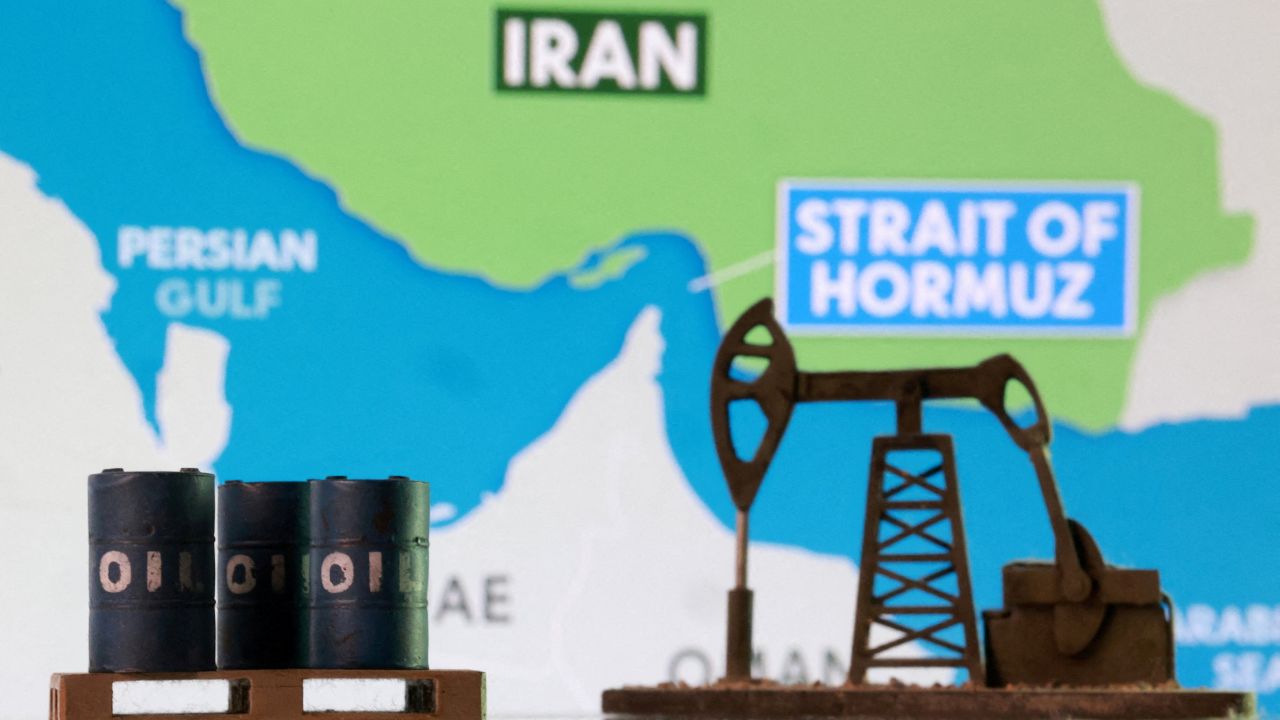
At the same time, the United States has tightened sanctions on Iranian oil exports and has been linked to the February 28 joint military operation with Israel targeting Iranian strategic sites. While these developments appear to address distinct geopolitical crises, their implications extend well beyond bilateral disputes and carry broader consequences for global energy markets.
What is unfolding is not merely a series of sanctions or military operations, but a deeper restructuring of global energy governance and financial settlement systems—an arena where geoeconomics and institutional competition increasingly converge. By reshaping energy supply chains, financial transactions, and market access, major powers are gradually influencing the direction of global oil flows. Energy markets are therefore becoming strategic platforms where geopolitical influence and economic instruments intersect.
For China, energy security has long represented a structural vulnerability in its geopolitical position. The country remains heavily dependent on imported energy—particularly Middle Eastern crude oil and liquefied natural gas—while key maritime routes must pass through strategic chokepoints such as the Strait of Malacca. Should the United States and its allies leverage financial sanctions, shipping regulations, or settlement systems to influence energy flows, China’s energy supply chains could face considerable pressure.
Such developments illustrate what scholars have described as geoeconomics—the use of economic and institutional instruments to achieve strategic objectives. As Edward Luttwak argued in the early 1990s, great-power competition was gradually shifting from military confrontation toward economic and institutional arenas. Recent U.S. actions in energy markets and financial systems reflect precisely this form of power projection through markets and institutions.
Yet interpreting these developments solely through the lens of energy supply risks oversimplifying the broader dynamics of contemporary geoeconomic competition, which increasingly involve technological supply chains, financial infrastructures, and institutional rule-making.
2. The Belt and Road and Strategic Depth: From Energy Corridors to Institutional Networks
One of the underlying motivations behind China’s Belt and Road Initiative (BRI) has been the desire to mitigate uncertainties surrounding energy and resource access. From Central Asian natural gas pipelines and the China–Pakistan Economic Corridor to port investments across Africa and the Middle East, Beijing has been constructing diversified channels for resource acquisition and transportation.
These infrastructure projects should therefore not be viewed merely as economic cooperation. Rather, they represent a long-term geoeconomic strategy aimed at expanding China’s strategic depth.
Within this framework, the BRI is not simply an infrastructure investment program but an attempt to construct a new transregional connectivity architecture. Through ports, railways, energy infrastructure, and financial arrangements, China is gradually assembling an infrastructure network spanning Eurasia and the Global South—one that reduces reliance on singular maritime routes.
Viewed from the perspective of institutional and network power, China’s strategic space is therefore not simply shrinking; it is undergoing structural reconfiguration. What emerges is not a simple contraction of China’s strategic space, but a competition between two different models of global economic ordering.
On one side, the United States seeks to reinforce the existing order through financial systems, technology controls, and institutional alliances. On the other, China is building an alternative set of economic linkages through infrastructure and resource investment.
As Robert Blackwill and Jennifer Harris have argued, economic instruments are increasingly central to twenty-first-century statecraft. Energy, trade, and financial systems are no longer merely economic matters—they are extensions of national power.
3. China’s Policy Rhythm: From Expansionary Globalization to Security-Driven Globalization
Understanding shifts in China’s strategic space also requires close attention to Beijing’s domestic policy trajectory. In recent years, Chinese policy discourse has increasingly emphasized security, resilience, and self-reliance, particularly in industrial supply chains, advanced technology, and energy systems.
These policy signals suggest that Beijing is gradually integrating national security considerations more deeply into its economic development strategy.
From a geopolitical perspective, this transition can be understood as a response to external pressure. U.S. restrictions on Chinese technology sectors and controls on critical supply chain technologies have reinforced Beijing’s determination to strengthen domestic capabilities.
China’s globalization strategy is therefore evolving—from an earlier model characterized by deep integration with global markets toward what might be described as security-oriented globalization, in which supply chain resilience and strategic autonomy take precedence.
This shift is also visible in China’s outbound investment patterns. Investments in energy, minerals, and strategic resources have increased, while certain high-risk financial ventures have declined. Such adjustments indicate that Beijing is recalibrating its global economic posture to maintain strategic depth in an increasingly competitive geopolitical environment.
From this perspective, claims that China’s strategic space is simply shrinking may be misleading. A more accurate interpretation is that China’s strategic model itself is undergoing transformation.
4. Institutional Competition and Technological Nodes: From Territorial Control to Network Power
One of the defining features of contemporary U.S.–China rivalry is the transition from traditional geopolitics toward geoeconomic and institutional competition. Historically, great-power rivalry revolved around territory, military capabilities, and alliance systems. In today’s highly globalized economy, however, real power often resides in critical nodes of global networks.
Energy markets, financial clearing systems, and advanced technology supply chains now function as strategic nodes within the global economy.
In this context, the meaning of “strategic space” is changing. Power is no longer determined primarily by territorial control but by the ability to influence key nodes in global networks—whether semiconductor technologies, financial settlement systems, or energy transportation routes.
The concept of weaponized interdependence, developed by Henry Farrell and Abraham Newman, provides a useful analytical lens. When states control critical nodes in global economic networks, they can leverage institutional and regulatory mechanisms to shape the economic behavior of others.
The semiconductor industry illustrates this dynamic particularly well. Global chip supply chains are not dominated by a single state but distributed across multiple technological nodes: the United States controls chip design and EDA software; Japan dominates key materials and manufacturing equipment components; the Netherlands, through ASML, controls the core technology of extreme ultraviolet lithography.
Within this network, Taiwan’s TSMC has emerged as one of the most critical nodes in advanced semiconductor manufacturing. With cutting-edge processes at the three-nanometer and two-nanometer levels, TSMC’s production capacity underpins much of the global technology ecosystem. Consequently, the semiconductor supply chain has become a focal point of geopolitical competition.
From a geoeconomic perspective, such concentration of technological capacity within strategic nodes transforms technology industries into instruments of great-power rivalry. U.S. export controls targeting China’s semiconductor sector reflect efforts to maintain technological advantages through control of supply chain nodes. Meanwhile, China’s industrial policy and state-led investments aim to reduce dependence on external technological chokepoints.
Strategic space, therefore, should no longer be understood purely in geographic terms. Whether in energy transportation, financial clearing, or semiconductor manufacturing, power increasingly derives from control over key nodes within global economic networks.
In the emerging networked geopolitics, control over nodes often matters more than control over territory. In this sense, TSMC represents not merely a corporation but a geopolitical node capable of influencing the global balance of technological and strategic power.
5. The Two Sessions and a Possible U.S.–China Summit: Diplomatic Timing and Strategic Signaling
Assessing China’s strategic posture also requires attention to Beijing’s political calendar. The annual Two Sessions—the meetings of the National People’s Congress and the Chinese People’s Political Consultative Conference—serve as a key platform for signaling China’s policy priorities.
Recent policy discussions have highlighted supply chain security, technological innovation, and advanced manufacturing, underscoring Beijing’s determination to strengthen industrial autonomy and technological competitiveness.
Equally significant is the interaction between domestic policy signaling and diplomatic timing. Observers have increasingly focused on the possibility of a U.S.–China leaders’ meeting toward the end of March, preceded by contacts between senior economic officials.
Meanwhile, U.S. sanctions and pressure targeting countries such as Iran—important energy partners for China—add further geopolitical complexity to the diplomatic environment surrounding any potential summit.
In this sense, the Two Sessions and a potential leaders’ meeting can be viewed as part of a broader strategic sequence: the former articulates China’s domestic policy orientation, while the latter represents the external arena in which great-power competition unfolds.
6. Conclusion
Contemporary geopolitical competition is no longer defined primarily by territorial rivalry or military confrontation. Instead, it increasingly revolves around the restructuring of supply chains and institutional networks. Strategic space today is less about geographic boundaries and more about the ability to influence critical nodes within the global economy. Ultimately, the central question of great-power competition in the twenty-first century is not simply who controls territory, but who possesses the capacity to redesign the rules governing global networks.

カテゴリー
最近の投稿
- 中国代表団の日本領土・北方四島訪問と迫りくる「米中露戦後秩序の構図」 トランプが「米中露首脳会談」提案
- フライング・タイガースに端を発する東アジアの歴史認識を巡る争い
- トランプが中露に石油精製製品の増産・供給を要請した結果、習近平の「米中露戦後秩序の構図」を強化か?
- 岩屋氏の中国に対する「日中共同声明の再確認提案」は無駄 習近平が何を狙っているのかをわかっていない
- 共産主義者を追い出す
- 習近平の「米中露戦後秩序の構図」は、日本を「新型軍国主義」と指摘することによって何を狙っているのか?
- The Flying Tigers and the Battle over Wartime Memory in East Asia
- WWⅡの同盟国・米中の敵国は日本 そこに潜む中国の恐るべき「新型軍国主義・日本とG2」構図
- Casting out the communists
- トランプ「中国は同盟国」発言は事前に習近平と調整 梯子を外された高市首相
RSS