

“Jensen Huang is a fool who should never again be allowed close to anything involving national security.” Paul Krugman, 12 November 2026
Pick Your Scandal
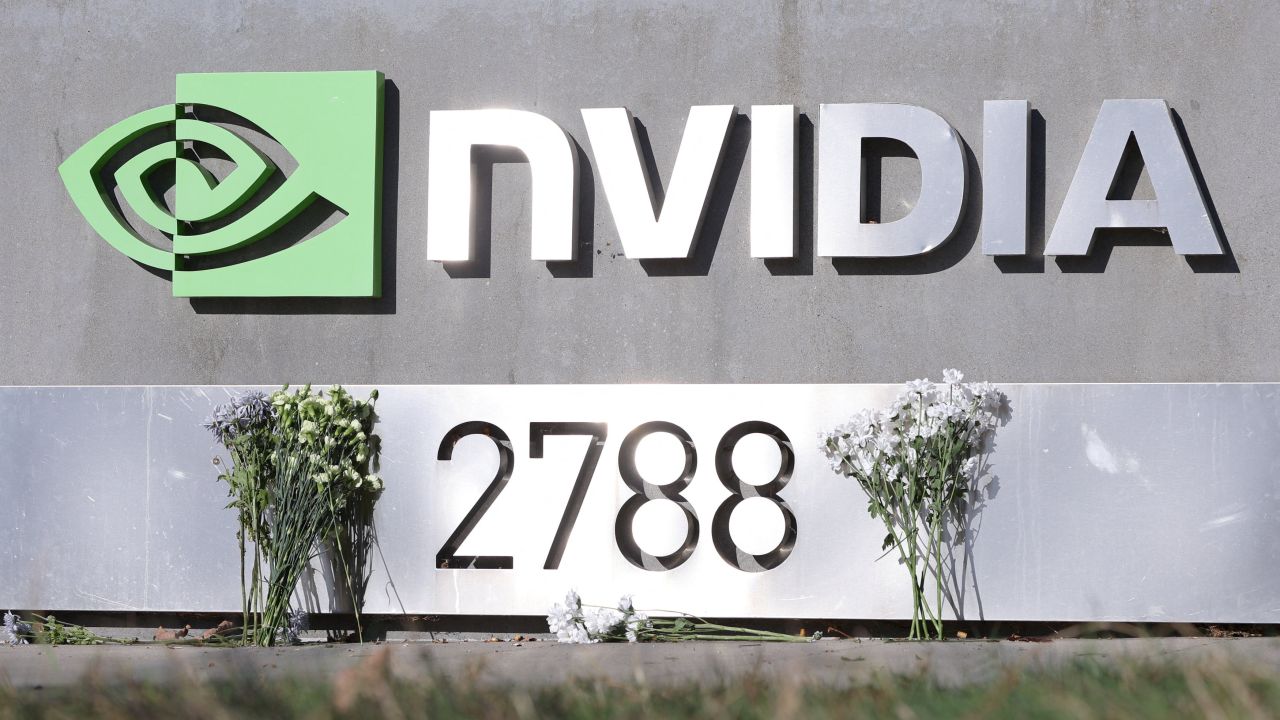
Right on cue after last month’s column warning of the dangers of an out-of-control tech bro oligarchy having too much influence over US national security, the Jensen Huang and Nvidia scandal broke, and it remains market-moving, value-destroying and in the headlines daily, if not hourly.
The original headline was of Jensen Huang conducting an affair with Alice Huang, the CEO of Megaspeed, one of Nvidia’s major chip buyers, headquartered in Singapore. Media reports state that US intelligence consider her an asset of the PRC intelligence agency, the Ministry of State Security. The “Nvidia boss has affair with Chinese spy” headline was just the beginning of Jensen Huang and Nvidia’s long nightmare. Two other affairs with Nvidia staffers were soon reported, completely in breach of Nvidia’s code of conduct.
As more information came to light about Alice Huang and Megaspeed, it became clearer that Megaspeed is at the centre of a web of real and shell companies across Asia which are likely funded to some extent by leading Chinese tech companies. These companies are involved in Malaysia-based data centres which are providing compute capacity to leading Chinese domestic companies, and are potentially routing restricted Nvidia chips direct to China itself.
If this wasn’t enough, it is now clear that the Trump White House was informed of the likelihood of Jensen Huang’s affair with a suspected MSS asset multiple times for over a year. The US national security community knew there were serious risks; they were reported up the chain of command, yet Trump did little to intervene.
Soon after the spy allegations broke, Jensen Huang resigned, admitting to the affair, and the board scrambled to replace what had been the company’s irreplaceable leader. While the tech bro oligarchy are angling for his return, they have failed to appreciate the depth and breadth of the evolving scandal. Nvidia is going to be mired in investigations for years to come. Jensen won’t be enjoying any retirement; he’ll be too busy giving testimony to Congress, the FBI and the SEC. He will appear before Congress next month, but that will only be the start of his long Washington DC sojourn.
Just the start
The stock market collapse of Nvidia has been swift. Having reached an all-time high of US$239 on October 6, it had fallen to US$186 on November 6 when the initial story broke, and it closed two weeks later at US$125. From its peak it has lost around US$3 trillion of market capitalisation. Days after the scandal, the interim CEO reported quarterly revenues of over US$100 billion. Whatever the sins and failings of its former CEO, it is an essential part of the larger AI ecosystem, using its vast revenues and profits to help fund data centre expansion and AI start-ups, which in turn rely on Nvidia to provide the very chips they run on. This circular funding model and the huge investments being made in physical AI infrastructure were already leading observers to ask if the industry was too financially stretched. It’s hard to imagine that the AI industry can continue to boom as it has without Nvidia also booming, yet without the loose protection of Trump’s White House, it is hard to see how Nvidia will be able to grow as before. This past week may have seen the beginning of the end of the AI boom.
The blue tsunami of Democratic wins across both the House of Representatives and the Senate will see a broad range of investigations into corruption and malfeasance in the Trump administration, and the Nvidia revelations will only add to that.
From reporting in both The New York Times and the Financial Times, it is clear that Megaspeed was an unlikely buyer of so many of Nvidia’s chips. A relatively new company with a limited corporate presence should have raised red flags as to what its business was and who its customers were. Not all Nvidia chips are subject to export restrictions, but the company’s compliance team should have been well aware of the risks of dealing with such a company. Further reporting has revealed that the Department of Commerce had signed off on chip sales from both Nvidia and AMD to various PRC entities. There are going to be lots of questions for both Howard Lutnick, the Commerce Secretary, and Nvidia management, past and present. Jensen and Lutnick are the headliners, but hundreds of people, perhaps thousands, must have been aware of the limits of the compliance and the true nature of the companies. If they weren’t aware, then they should have been.
Jensen and Donald
Nvidia is a bit different from many of the later tech companies. It was founded in 1993, listed in 1999 and doesn’t have the dual-class voting shares which are now so common across tech companies. It really is one share, one vote for shareholders. Jensen Huang owns only around 3% of the company and has maintained his position through achievement and product success, not through dual-class share games. He has been the CEO since listing and has without doubt been the driver of the company. Over a decade ago, when Nvidia was a relatively unknown company focused on making graphics cards to render computer games, Huang made a big push into AI, understanding that his GPU type of chip was ideal for the type of calculations that AI needed to perform. Like many driven CEOs, he was an inspiration to many and, according to press reports, a hard taskmaster, often belittling or humiliating colleagues if they failed to perform. He was one of three founders of the company, but it became very much his company.
Jensen Huang was largely a stranger to the White House before Trump’s second term. There is no record of any one-on-one meetings with President Biden, nor did Nvidia’s products call for the scrutiny that social media and platform companies had to deal with.
Unlike the other tech bros, Huang wasn’t at Trump’s inauguration in January 2025, yet by October of that year Nvidia was listed as a donor to Trump’s ballroom. It later emerged that Nvidia had given US$25 million to the ballroom, joint first with Apple. An unseemly achievement.
Huang himself said on a podcast that Howard Lutnick had called him to say how important he and his company were and that the President’s door was always open to him.
Cutting-edge chip development was one area where the US had a clear lead over China, and it became an extension of the trade war and the more assertive position towards China which Trump had initiated in his first term. Before he left office, Biden proposed a new regulatory framework which a senior Nvidia executive described as a “200-plus page morass”. Huang has made no secret of his position that he wants to sell his chips to whoever wants to buy them, and that selling them to China will make China dependent on the US technology stack, thereby ensuring a baked-in US advantage in chips. Why he thinks China won’t try to copy the chips, as it is doing with literally every technology it has bought, isn’t clear. China’s most recent Five-Year Plan emphasises the need to increase self-sufficiency in high tech. As an intellectual position, an open sales policy without export restrictions might be reasonable, but it currently runs counter to the law of the land. The US does have an active chip export licensing regime in place, and the most advanced Nvidia chips certainly fall under it.
Since Trump’s return to the White House, the enforcement of and determination to follow through with the licensing regime have been on again, off again, with a general bias towards looser rather than tighter restrictions. Trump would have been hearing one story from Jensen and a much more hawkish one from Rubio and Bessent.
Understanding the timeline of events is important, and it is far from clear. Jensen Huang’s friendship with Alice was noted well before Trump re-entered the White House and was even reported in the Taiwanese media. Did Alice Huang encourage Jensen’s friendship with Trump to better pursue the loosening agenda? Or indeed, was Jensen relaying his conversations back to her?
Even if Alice Huang is not an MSS agent, she can certainly act as an asset. Under Chinese law, the MSS can compel PRC nationals to help with national security operations. Trump’s early defence of Jensen Huang, that he didn’t know she was a spy, is not only laughable but beside the point; what matters is whether she could have been of value to the MSS.
Concerns around Megaspeed are not new. Reporting confirms that Rubio had briefed the President multiple times about the potential risk, and yet Howard Lutnick, as Commerce Secretary, seemingly failed to act by adding Megaspeed to the Entity List, which would have curtailed its sales. Scott Bessent, the Treasury Secretary, took the incredible step of throwing Lutnick under the bus by clearly stating that Treasury wanted action against the company but Commerce had failed to act.
Lutnick had been instrumental in bringing Jensen and Trump together. He also had clear conflicts of interest, as his former financial firm had large stakes in Nvidia, and his sons, who now run the firm, also reportedly have investments in the data centres.
In the past few days, the loophole which allowed PRC access to Nvidia chips via the Malaysian data centres has been closed by a new ruling from the Commerce Department. But it explicitly states in the preamble that the new ruling is at the direction of Treasury and the National Security Council. National security is playing second fiddle to personal squabbles among the leading cabinet members. A tragic new low of incompetence from Trump’s second term.
Plenty of blame to go around
The soon-to-be-replaced Congress is holding hearings next month, and the new Democrat-controlled Congress, which will be seated in January, will certainly continue to investigate who knew what and when. There is going to be plenty of blame to go around when the full story is known. The more one reads the reports of what was going on, the more there seems to have been a wilful blindness on the part of Nvidia to the true nature of the customer and its users.
The White House is keen to play down the spy associations to lessen its failure to act with regard to Megaspeed, but it stretches credibility to breaking point to think that Lutnick would deliberately go against Trump on chip restrictions. It had been reported that Rubio had convinced Trump to act, yet Lutnick took no action. Can that really be true?
As the Nvidia scandals multiplied, Trump took himself off to the APEC summit in Shenzhen. Expected to be the big US-China event of the month, it became a sideshow to the Nvidia drama. The summit proved of little consequence, except as an opportunity for the Chinese hosts to visually belittle selected world leaders. Even the much-touted three-way meeting between China, Russia and the US resulted in nothing but a Chinese photo-op.
After the long flight back from Shenzhen to Washington, Trump sensed that he needed to say something about data centres, and his comments at the post-APEC press conference, while far from policy, were an ominous sign of the mood in Washington. “We’re not allowing data centers to go into other countries, because China will take all of them, and we’re not allowing that to happen. And we’re going to put tremendous penalties on companies that try to do it,” he said.
The change of control in Congress, the White House’s failure to act against Chinese spying regarding the US’s most sophisticated technology and the multiple breaches of corporate governance and oversight are going to mean there is no going back to how things used to be. As more evidence comes to light, terms like “traitor”, “traitorous” or “criminal enterprise” may soon find themselves on the lips of members of Congress.
If the MSS did try to coordinate the downfall of Jensen Huang, any celebration will likely be short-lived. If a chill settles over US AI, then a winter could well be approaching for China’s AI champions. For all the US failures, China remains the threat.
Chinese AI stocks already corrected sharply earlier this year; the US market may soon do likewise. A falling market can’t be an excuse not to investigate, but Trump may find himself completely unable to respond to problems he has helped bring upon himself and the country.


Privatizing China: Inside China's Stock Markets
by Fraser J. T. Howie (Author), Carl E. Walter (Contributor)

Red Capitalism: The Fragile Financial Foundation of China's Extraordinary Rise
by Carl Walter (Author), Fraser Howie (Author)
カテゴリー
最近の投稿
- Artificial Intelligence and Human Stupidity
- トランプ政権も「米中露首脳会談は定例化させる」と発表 「蚊帳の外」日本はどうするのか?
- 米中露首脳会談の目的は習近平が狙う「台湾統一」 日本にはなぜそれが見えないのか?
- 米中露首脳会談の狙いは日本なのに、APECで高市首相を冷遇しないよう中国政府に求めた日本政府の不見識
- エヌビディアCEOの解任は「在米華人」がAI半導体をリードしていることへの米国白人社会の恐怖の結末か
- 2027年に向けた習近平の政治基盤強化:党規律、軍粛清、中国統治のジレンマ
- エヌビディアCEOの不倫相手が中国人スパイ容疑 PartⅠ:事件の経緯と中国のAI半導体をめぐる疑惑
- 中国から学ぶ
- トランプ惨敗に対して習近平はどう出るか? 日本はそのとき
- Xi Jinping’s Political Consolidation Ahead of 2027: Party Discipline, Military Purges and China’s Governance Dilemma
RSS