

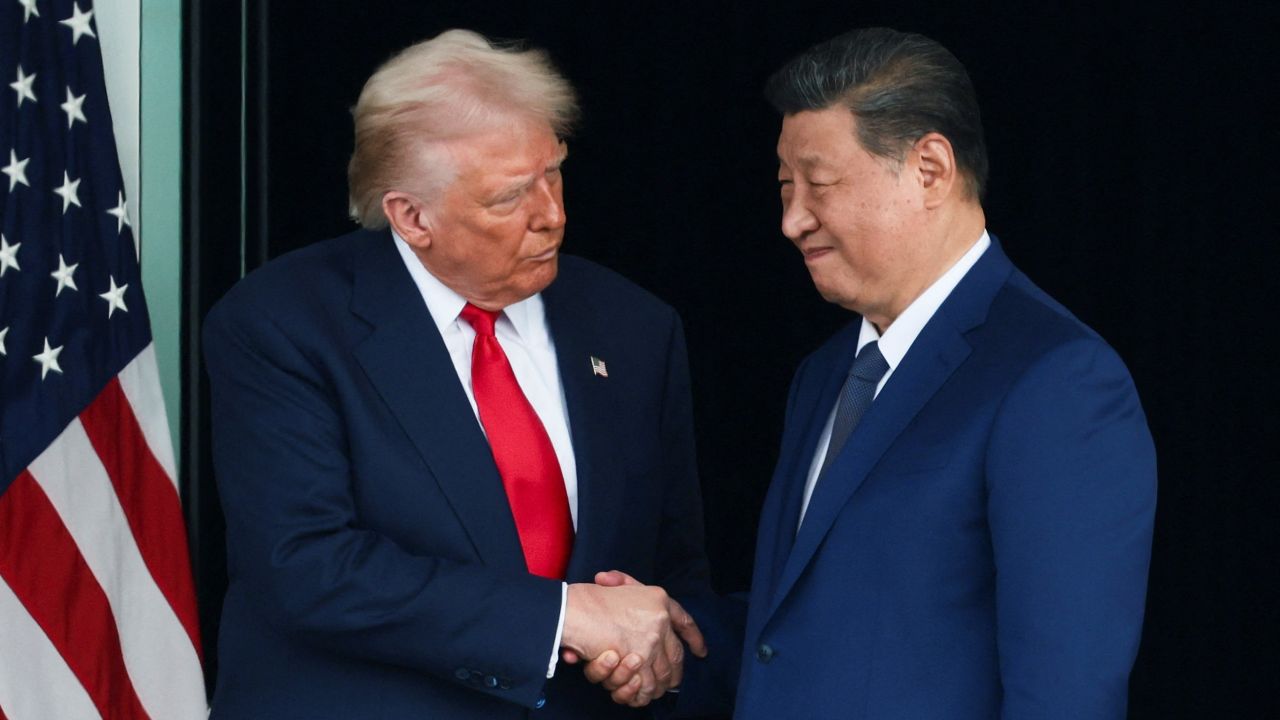
Summit
In mid-May, if all goes as planned and nothing needs to be delayed or cancelled Donald Trump will travel to Beijing to meet CCP General Secretary Xi Jinping. Originally planned for mid-April this will be their second meeting of Trump’s second term and the fifth in total. Having been postponed once and this is such an important meeting it should be a given that the meeting will go ahead but two weeks can be a very long time in the reality TV presidency of Donald Trump so nothing should be taken for granted.
During his first term Donald Trump’s willingness to speak up against China whether in trade practices, technology theft and geopolitical threats completely changed the discourse around China. It wasn’t that experts didn’t know that China posed an ongoing security risk whether in trade practices, spying or technology theft but those concerns were often downplayed or outright ignored by politicians who continued to blindly engage with China in the hope of economic opportunities. Some countries understood the dangers that China posed, both Japan and Australia had been on the receiving end of restrictive China trade practices but many in Europe and in the US failed to fully appreciate the China risk, they certainly didn’t act on it. That brought in the period of decoupling and disengaging from China. Supply chains would re-adjust to reduce Chinese dependencies, governments would refit telecommunications networks to ensure they were not dependent on Chinese 5G tech, companies would be delisted from stock exchanges. Coupled with investment and tariff restrictions the US posture to China had significantly changed. During Trump 1.0 the talk was of big trade deals to rebalance deficits although a Phase 1 deal was agreed it broadly fell by the wayside and harder issues were never addressed.
The tariff and investment restrictions were tightened up and remained in place under Biden’s term and the US had rediscovered industrial policy as a way to boost manufacturing and develop sustainable energy opportunities but that has since been discarded. Trump 2.0 has used tariffs again and again against China to try and change outcomes and drive changes. It has failed. Not only were many of the threatened tariffs never implemented, but they were also largely ruled illegal by the US Supreme Court. The trade war of last year did give China and opportunity to push back, at least in the short term, by restricting the export of rare earth minerals.
When Trump last met Xi in Busan in October Xi was likely pleased that China had been able to largely weather the Trump tariff chaos. For this meeting Xi probably thinks he is in a stronger position than last year. Trump comes as a President whose ill-thought-out war against Iran has brought economic disruption to the global economy which will take years to recover and has effectively ended the post-WW2 American global led order.
Keeping Expectations Low
Although China suffered the highest tariffs of any country last year that still didn’t stop it from recording a record high trade surplus. The US bilateral deficit with China fell but China’s export engine shipping or trans-shipping thru third countries continues to power ahead. Trump’s administration is meant to be tough on China yet there seems little direct impact by looking at the numbers. The US side comes into this meeting with remarkably low expectations. They will no doubt build on the agreements of last year around selling China more US agricultural products and energy, they will look to defuse continuing tensions around rare earth supply and likely try to get some support from China to persuade Iran to open the Straits of Hormuz. Yet each of these issues and problems are a direct consequence of Trump’s policies and ill-thought-out military actions. Trump is like an arsonist looking to receive credit for calling the fire brigade to put out the fire he started. Treasury Secretary Scott Bessent has hinted at some grand bargain if China was to rebalance its economy, but this is truly laughable and one must wonder who is advising Bessent. Xi Jinping hasn’t built up the China of today only to tear it down and rely on the wholly unstable and untrustworthy Trump administration for his economic security.
China may have some leverage when it comes to persuading Iran to open the Straits of Hormuz but even if they agree and succeed the Trump administration has made an incredibly foolish mistake by causing the problem in the first place only then to let their primary adversary, China, solve it. Indeed, the entire Hormuz mess will not only strengthen China’s partner, Iran, but it will effectively allow space for China to take a more active role in the region.
For China their primary aim is to return to a more stable economic and security environment. The desire to be treated as a peer equal to the US has effectively already been achieved. Trump loves the strongman leader and continues to praise Xi even when he criticizes China. Trump revels in the daily chaos he creates, he really is the great showman full of spectacle and distraction. That is fine for circuses but not for superpower leaders and his madman theory of decision making does not sit well in Beijing where long term stability and planning are prized. If Xi can obtain a more stable tariff and trade environment, if he can reduce the threats of sanctions and investment restrictions, he will be well pleased. To achieve this, he will almost certainly promise stable rare earth access and perhaps promise trying to bring Iran back to the negotiating table.
China and most of Asia have been directly affected by the closure of the Straits of Hormuz although China is better placed than some to weather both the higher prices and supply disruptions, at least for the immediate term. Yet they are also no doubt reveling in the mess which the US has found itself in. The Pentagon can claim they have met all their military objectives. Iran’s navy, air force and air defenses are destroyed, their ballistic missile and drone capacity has been severely reduced yet war is ultimately a tool to enact politics demands. All those same military claims can be made about the Vietnam war, yet the US clearly lost. It is the politics which matters and the US military actions have ultimately weakened their alliances, caused their allies to be attacked and will almost certainly see the weakening of the global sanctions on Iran and at least in the short-term cemented regime’s control over the country. But the Chinese must also be studying the real military successes and abilities of the Americas over the past two months with an eye to a possible US response regarding a possible Taiwan invasion. It is noteworthy that Iran’s vast drone and missile capacity has had remarkably limited impact. Little damage has been done to Israel or to American bases. There have been a handful of notable successes but the fighting capacity of the US military has hardly been degraded at all. Whether the war encourages military action by Beijing isn’t clear at all but just as Ukraine has fought the might Russia to a standstill so again the smaller power Iran and has not been defeated by the greater power, America.
No doubt this weakening of the US’s standing in the world is what Xi meant when he spoke to Putin in 2023 and said, “Right now there are changes – the likes of which we haven’t seen for 100 years – and we are the ones driving these changes together”. But neither Xi nor Putin can fully capitalize on the Trumpian missteps.
China’s Path
China will be looking for economic and political stability in the relationship with the US, but China’s aims of self-sufficiency domestically combined with other countries dependency on the China supply chain hasn’t changed. Just this week Chinese authorities blocked the Meta takeover of AI company Manus. Manus was founded in China by Chinese nationals but both staff and IP were moved overseas to Singapore last year. Earlier this year while Beijing was reviewing the deal it stopped two Manus staff from leaving China, exit bans on businesspeople are a long-established practice of the Chinese government although often the purpose, except to frighten other executives, isn’t always clear.
What jurisdiction China has over an American company buying a Singaporean company isn’t obvious, but it clearly sends a chilling message to all tech companies, whether Chinese or not, when it comes to buying China-related companies. The move to Singapore was done in part to allow such takeovers without PRC interference.
This mimics the interference which Beijing has exercised in the Hutchison ports dispute when the company was trying to sell its ports management business which included the Panama Canal ports, that deal remains in limbo with Hutchison still not having completed a sale.
In the case of Manus the technology has already been rolled out by Meta into some of their software applications and with Zuckerberg being close to Trump surely the US side will look to raise the restriction at the summit. When EU or UK regulators have suggested taxing, regulating or restricting US tech companies’ operations the US has generally responded with threats of tariffs if any action is taken against the companies. Trump could try the same tricks against China but perhaps the cynic might suggest that China has blocked the deal solely to allow it to gain a concession elsewhere come the summit. Such is the nature of global high-level politics in today’s world.
After one postponement it is most likely that the summit will now go ahead as planned. High level meetings are always important and part and parcel of regular diplomacy. Given that expectations are low on both sides the summit should be a success, or at least not a failure. Both sides have something the other wants but agreements made in mid-May could well be forgotten or ignored within weeks. China has often promised large purchases of agricultural commodities but failed to follow through. The experiences of the first Trump term should be instructive. As for Trump his position and rhetoric could already have changed on the plane back to the US!
There is nothing to suggest that China is going to change its economic model anytime soon, the most recent five-year plan broadly called for continuation of existing trends. There is also nothing to suggest that America can offer any incentive or grand bargain to change that. China understands that Trump is very transactional. He is looking for simple deals with big numbers which he can call a win, regardless of the actual implications. But effectively pushing back against China cannot be addressed by selling more soy beans or hydrocarbons. Effective policy against China’s mercantilism requires countries working together and using their combined might to tackle China. Trump has blown up that model, and it has now become very difficult to present a united front towards China if the Americans are only interested in narrow transactional deals for themselves.
Leaders should meet, and Trump, and his staff should be talking with the Chinese, that is no different from when a slew of European leaders made the trip to Beijing but expectations should be kept low. Some short-term transactional deals are likely, no grand bargains are on the table. Restoring stable relations is the primary goal but even if that is achieved, their ongoing relationship will continue to be fraught with tensions. Trump runs the presidency like a reality TV show, even if the Trump in Beijing episode goes smoothly drama and crisis is never far away.


Privatizing China: Inside China's Stock Markets
by Fraser J. T. Howie (Author), Carl E. Walter (Contributor)

Red Capitalism: The Fragile Financial Foundation of China's Extraordinary Rise
by Carl Walter (Author), Fraser Howie (Author)
カテゴリー
最近の投稿
- 中国代表団の日本領土・北方四島訪問と迫りくる「米中露戦後秩序の構図」 トランプが「米中露首脳会談」提案
- フライング・タイガースに端を発する東アジアの歴史認識を巡る争い
- トランプが中露に石油精製製品の増産・供給を要請した結果、習近平の「米中露戦後秩序の構図」を強化か?
- 岩屋氏の中国に対する「日中共同声明の再確認提案」は無駄 習近平が何を狙っているのかをわかっていない
- 共産主義者を追い出す
- 習近平の「米中露戦後秩序の構図」は、日本を「新型軍国主義」と指摘することによって何を狙っているのか?
- The Flying Tigers and the Battle over Wartime Memory in East Asia
- WWⅡの同盟国・米中の敵国は日本 そこに潜む中国の恐るべき「新型軍国主義・日本とG2」構図
- Casting out the communists
- トランプ「中国は同盟国」発言は事前に習近平と調整 梯子を外された高市首相
RSS