

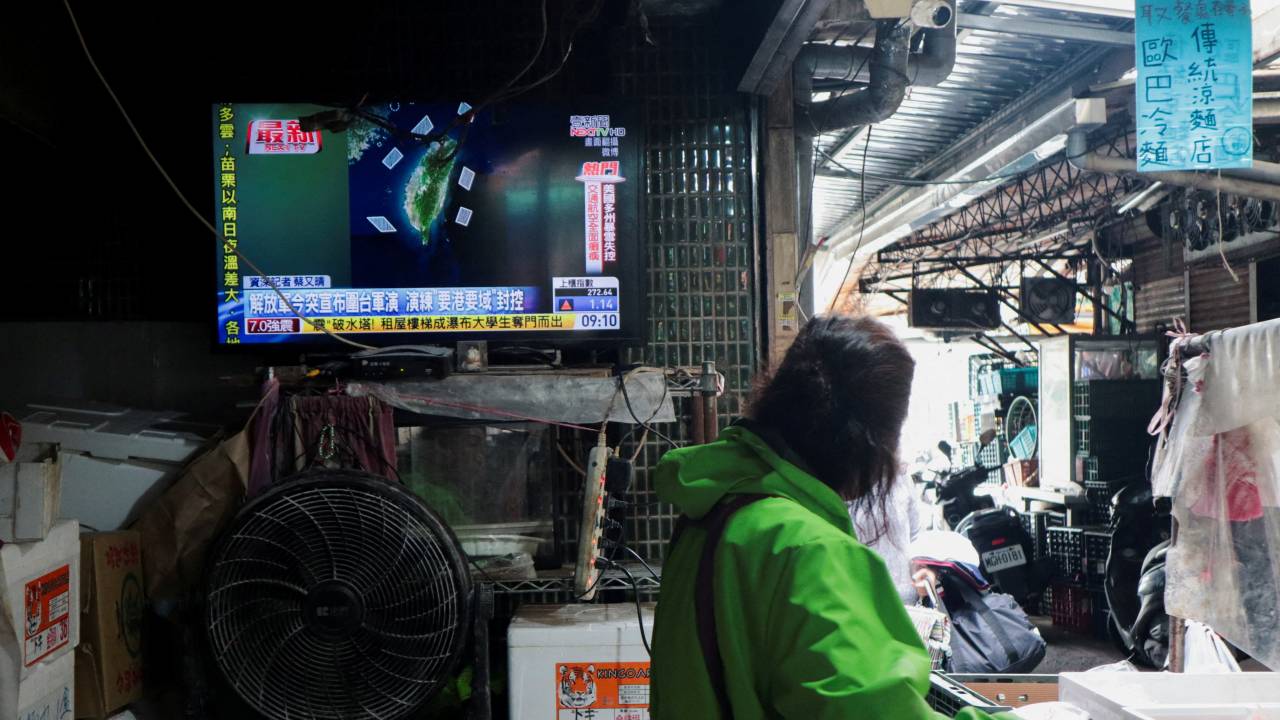
In recent years, debates on China’s military trajectory and regional security risk have often centered on People’s Liberation Army (PLA) elite reshuffles, anti-corruption campaigns, and the internal governance of the armed forces. Professor Homare Endo has argued that repeated investigations of senior figures within China’s Central Military Commission for “serious disciplinary violations” should not be reduced to a single episode of factional politics. Rather, they reveal the PLA’s entrenched, structural corruption and institutional deficiencies. She also criticizes the tendency within parts of Japan’s media and policy community to oversimplify such episodes—thereby underestimating the long-term damage corruption can inflict on military modernization and the state’s capacity to execute grand strategy.(https://grici.or.jp/7084, 中国の中央軍事委員会要人失脚は何を物語るのか?)
These observations are analytically significant for understanding the constraints of China’s internal governance and the institutional dynamics of the PLA. Over an extended period, Professor Homare Endo has developed a substantial and multifaceted body of research on China–U.S. relations, the evolution of China’s military system, and the Taiwan issue, including careful examinations of strategic thinking under the Xi Jinping leadership. Her work offers an important analytical foundation for considering how political control, military reform, and strategic orientation interact within contemporary China.
Building on this established line of inquiry, the present discussion seeks to extend the analytical focus in a complementary direction. This article draws attention to another dimension that merits closer consideration: the gradual transformation in how the United States conceptualizes and manages China-related risks. From this perspective, changes in external threat management frameworks—alongside internal developments within China—may be understood as shaping the broader regional security environment and Taiwan’s strategic context.
I. The Core of the U.S. Strategic Shift: War Is No Longer the Primary Solution
For a long period, U.S. security discourse on China was organized around the logic of a “potential military threat.” Whether in Indo-Pacific force posture, alliance deterrence, or Taiwan policy, the central objective was to prevent conflict escalation. In recent years, however, U.S. national security strategy and related policy documents have shown a consistent—but often underappreciated—shift: a deliberate softening of “direct military threat” language, accompanied by an emphasis on economic security, supply-chain reconfiguration, technology competition, and the construction of institutional coalitions.
This does not reflect complacency. It represents a more deliberate, long-horizon, and structurally oriented choice. A growing U.S. consensus is that if tariffs, industrial policy, investment screening, technology controls, and allied coordination can steadily erode China’s leverage in critical industries and its capacity to export institutional influence, then war itself becomes neither necessary nor strategically rational.
In other words, Washington has not abandoned deterrence; it is relocating “threat management” away from high-risk, irreversible military confrontation and toward an arena that is cumulative, adjustable, and multilateral—namely, institutions and political economy. This is the logic of what might be called “de-warization of competition”: not denying conflict risk, but systematically raising the costs of escalation until it loses strategic appeal.
“Not Naming the Threat” Is Itself a Strategic Signal
In this context, the tendency in U.S. policy texts to avoid loudly labeling China as a “military threat” is not merely rhetorical. It is a deliberately calibrated signal, with at least three functions.
First, it avoids pushing competition into a zero-sum storyline that requires war as the ultimate test, thereby reducing the political pressure on Beijing—under nationalism and security anxiety—to “act” to prove resolve.
Second, it preserves maneuvering space for institutional, economic, and technological instruments, allowing competition to become a manageable war of attrition rather than a short-term showdown.
Third, it keeps strategic initiative in the hands of rule-setters rather than military gamblers—prioritizing standards, networks, and systemic leverage over crisis-driven escalation.
The implication is straightforward: when major international actors choose to set the tempo through institutional instruments, any unilateral escalation toward armed conflict can backfire—undermining the escalator’s legitimacy and shrinking its room to operate in the broader contest of rules and coalitions.
Taiwan’s Structural Dilemma: Threats Cannot Be Fully “Outsourced” to Institutions
The problem, however, is that Taiwan cannot fully replicate the U.S. approach. For the United States, China is a long-term competitor to be “managed.” For Taiwan, China remains the only actor with the capability for immediate, close-range military mobilization, and Taiwan is the most concrete object in Beijing’s sovereignty narrative and coercive toolkit. This structural asymmetry means that even if Taiwan stands at the periphery of institutional competition, it cannot outsource its security to institutions or allies in any absolute sense.
Taiwan’s threat assessment therefore faces two simultaneous forces. On the one hand, military deterrence remains the indispensable foundation of security; geography and political realities have not changed, so it would be irresponsible to assume war risk has naturally receded. On the other hand, Taiwan must recognize a parallel reality: as the primary competitive arena shifts toward institutions and political economy, the incentives for war are being structurally compressed.
Under these conditions, two propositions can be true at once: “a Taiwan contingency could be easier to imagine” and “a Taiwan contingency could be harder to justify.” Military capability accumulation keeps risk real; but institutional costs, international response, and the logic of long-term strategic competition are reducing the expected payoff of armed action.
II. Taiwan’s Three Priority Policy Tasks: Coordinating Military, Institutional, and Narrative Strategy
If U.S. China policy is moving from military threat management to institutional attrition, Taiwan cannot treat “whether war breaks out” as the sole indicator of security. The more practical question is: when incentives for war are being compressed but threats have not disappeared, which priorities best serve deterrence, time extension, and international embeddedness at once?
Taiwan’s security posture must advance on three synchronized levels—none of which can substitute for the others.
1)The Military Level: From Total Defense as an Ideal to Precision Deterrence that Imposes Unbearable Costs
Military strength remains the bottom line. But its strategic function is no longer symmetrical victory or comprehensive defense in an abstract sense. It is to ensure that any form of military action becomes high-risk and low-return. Accordingly, the focus should not be on scale or symbolic platforms, but on dispersion, survivability, and rapid responsiveness—so that once a crisis escalates, it becomes difficult to control, contain, or “safely” manage.
In this logic, the core question is not simply whether Taiwan can fight; it is whether an adversary can be confident it can bear the consequences. That uncertainty is the operational heart of modern deterrence.
2) The Institutional Level: Embedding Taiwan on the Frontline of Institutional Competition, Not as a Pure Security Consumer
When major actors relocate competition to institutions, political economy, and technology, Taiwan risks marginalization if it remains only a protected security beneficiary. Taiwan must instead become a non-substitutable node in institutional competition—valuable precisely because it anchors reliability, transparency, and rule-compatibility.
This includes (but is not limited to) supply-chain credibility, regulatory predictability, governance standards for emerging technologies, and the institutional reliability of democratic decision-making. Institutions themselves are a form of security capital: they allow Taiwan to accumulate strategic value outside the purely military domain—value that allies and partners cannot easily ignore.
Institutions, therefore, do not replace deterrence; they extend time, raise costs, and reduce the appeal of adventurism.
3) The Narrative Level: Avoiding “Conflict Trigger” Labeling and Becoming a “Stability Anchor”
The third layer is often underestimated: narrative strategy. When Washington deliberately tones down military-threat language and pivots toward institutional competition, any narrative that over-frames Taiwan as the “spark” of great-power war can unintentionally weaken Taiwan’s position in the institutional contest.
Taiwan needs a narrative strategy that reduces the legitimacy of war rather than stimulating war imagination—positioning itself as a stabilizer of regional order and a critical node of institutional reliability, rather than as a symbolic fuse of conflict.
Narrative is not propaganda; it is the environment in which other actors calculate risk. If Taiwan is widely perceived as part of institutional stability, then any attempt to unilaterally overturn the status quo will face higher political and institutional costs—costs that matter in the real calculus of escalation.
III. Conclusion: Taiwan’s Security Is Not About Predicting War—It Is About Buying Time
What deserves attention is not whether a particular personnel purge shifts the probability of war in the short term. The deeper question is whether war is still considered a bearable strategic instrument. The PLA’s governance adjustments reflect ongoing trade-offs among internal stability, external institutional pressure, and strategic options.
For Taiwan, the central task is not to forecast the exact timing of conflict. It is to maintain strategic balance between military deterrence and institutional competition—without collapsing all risk into a single binary narrative of “war or no war.” Military capability defines the floor of risk management; institutions expand the horizon of time. Taiwan’s security ultimately hinges on whether it can hold that decisive interval of time—the interval in which incentives for war lose both their payoff and their legitimacy.
カテゴリー
最近の投稿
- 中国代表団の日本領土・北方四島訪問と迫りくる「米中露戦後秩序の構図」 トランプが「米中露首脳会談」提案
- フライング・タイガースに端を発する東アジアの歴史認識を巡る争い
- トランプが中露に石油精製製品の増産・供給を要請した結果、習近平の「米中露戦後秩序の構図」を強化か?
- 岩屋氏の中国に対する「日中共同声明の再確認提案」は無駄 習近平が何を狙っているのかをわかっていない
- 共産主義者を追い出す
- 習近平の「米中露戦後秩序の構図」は、日本を「新型軍国主義」と指摘することによって何を狙っているのか?
- The Flying Tigers and the Battle over Wartime Memory in East Asia
- WWⅡの同盟国・米中の敵国は日本 そこに潜む中国の恐るべき「新型軍国主義・日本とG2」構図
- Casting out the communists
- トランプ「中国は同盟国」発言は事前に習近平と調整 梯子を外された高市首相
RSS