

A Not-So-Silly Season
In the UK, the summer months are often described as the silly season by the traditional mainstream media, especially the newspaper tabloids. With politicians normally on holiday across the northern hemisphere, the front-page stories are often less serious in tone with the usual political cut and thrust being absent. A survey of the August headlines and stories would indicate little new in the world of geopolitics.
In Trump’s America, it is hard to be shocked anymore even if the actions of the President seem unbelievable. The start of a new trade war with Canada, a stupid renaming of Lake Ontario, and the meltdown in the MAGA media ecosystem about the Trump aide Natalie Harp are all par for the course after a year and a half of second-term Trumpian chaos. Trump remains mired in war with Iran, and although he claims otherwise, he hasn’t won: the US doesn’t control the Strait of Hormuz, nor is Iran obviously weakened in the region. The recent threat to turn up the pressure on Iran via sanctions on both the country and its trading partners should be noted, but it comes far too late to have any real impact. Tough economic sanctions should have been used before military operations started, but the entire war has been so badly handled that it almost goes without saying that this effort will fail, like almost all other efforts to force Iran to bend to Trump’s will.
The UK has switched Prime Ministers over the summer, but since the House of Commons remains on its summer recess, political discussion has been limited. A similar pattern is seen across much of Europe, although the Ukraine war always deserves attention. Zelensky has come under pressure over changes he has made to the leadership of the army and the defence department, but from the fighting point of view, the Russians have basically failed to take any new territory even though they are losing an estimated 40,000 soldiers per month. A truly savage waste of life to try and achieve Putin’s warped dreams.
For China, it remains mired in the slow and painful unwinding of the massive credit expansion which drove the property market and infrastructure frenzy. Chinese growth remains weak, almost certainly lower than the already low official numbers. Bank lending in July was unexpectedly lower than forecast, and numerous anecdotal stories from China describe a middle class which has largely resigned itself to the end of the boom times. Consumption still continues; shops and restaurants remain busy, but no longer are the 1,000 yuan bottles of Chinese baijiu (白酒) the big sellers; it is the much cheaper range of products which people are buying. University graduates and those who would have been looking for white-collar jobs are accepting that the employment opportunities are more likely in blue-collar work and manufacturing. High expectations from decades of growth are giving way to the reality of a slower Chinese economy. Some may be actively “lying flat” and removing themselves from the rat race, but most are getting on and making the best they can of the more limited opportunities available to them. This acceptance of a slower economy and fewer, more limited opportunities is what the economists’ “middle-income trap” looks like in practice. The government numbers may not fully reflect the reality, but it is hard to deny the anecdotal changes observed on the ground.
Glimpsing the Future
Trumpian failure, British political dysfunction, and Chinese economic woes are not new stories; instead, it was the extreme weather across Europe which dominated the headlines. That is a glimpse of the future as climate change becomes more apparent in daily life. For the whole of summer, almost all of the UK and continental Europe have been experiencing heatwave after heatwave. The British are known for their obsession with the weather, but this year has been different. Extreme heat warnings have been common across almost all of the UK and elsewhere. The UK has seen six distinct heatwaves over the past few months with temperatures in the south of England easily reaching above the mid-30s Celsius. It was not only hot, but there was effectively zero rainfall in the south throughout July. England received about 10% of the usual July rainfall. Not surprisingly, this has left the “green and pleasant land” parched dry. Lawns have turned yellow and baked hard. The extreme heat wasn’t just a case of hot sunny days. Britons had to endure “tropical nights”, defined as when the overnight low doesn’t fall below 20 degrees Celsius, which impact sleeping conditions and hence overall general health. Only the northern part of Scotland was spared the worst of the heat, but it too suffered from erratic rainfall, although the many British tourists were delighted with the lower temperatures and the rainfall, which, although less than in previous years, was a welcome relief after the baking conditions of the south of England.
Continental Europe was even hotter, with temperatures in Paris exceeding 40 degrees Celsius. As for Spain, the heat map of the country over the summer mimicked the Sahara Desert. This type of weather is not normal for Europe; the entire continent is simply not designed to handle these conditions. Air conditioning outside of modern office blocks and malls is generally limited and often non-existent in many houses and flats. Especially in Britain, houses are designed to keep heat in; few would have expected that they needed to cool their houses, especially at night.
The extreme heat has done more than just break climate records. Full data and statistics haven’t been compiled yet, but excess heat is likely the cause of tens of thousands of deaths across the continent. Britain also saw a spate of drowning deaths as people tried to escape the heat in local rivers and the sea. Crops have been decimated. West Country farmers in England who grow apples are not even bothering to take in their crop this year as the trees have so little fruit to harvest. This follows on from a bumper crop last year. In both years, the harvest has stressed the trees, and the response could see the development of biennial bearing, where the trees only produce fruit every second year. That has obvious crop management problems for the coming years.
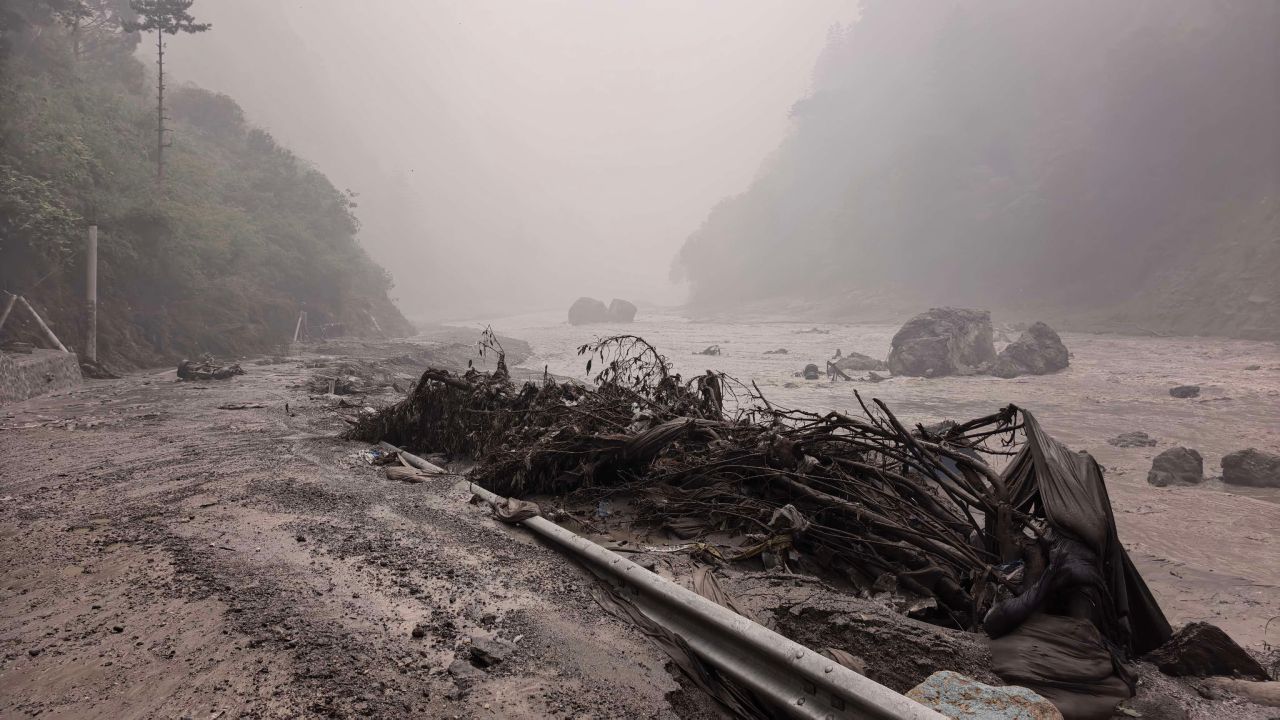
The most dramatic climate-related events are still unfolding in the Nepalese and Tibetan Himalayas. The frankly incredible footage of the flood and landslides really does look like a disaster film. The footage of the Chinese border post building being washed away defies belief. An architectural style beloved by the Communist Party, designed to show the power of the Party and humble the human, was washed away within seconds by the force of the landslide. Valley after valley and town after town have become a grey slurry mess. Hundreds are already confirmed dead, and thousands more remain missing. A final death toll will probably be unknown, and the bodies of most of the victims will never be found. Some bodies have been found over 100 miles away downstream in India. Initial causes were unclear, but it is now likely that a melting glacier or permafrost melt was the cause of the landslide and resultant flood water. Melting glaciers and permafrost are hardly news when it comes to climate change effects.
Nepal seems to have borne the brunt of the deaths and devastation with the landslide, but southern China also suffered from severe typhoon-related rain and flooding earlier in the summer. China is not unused to floods, and many historians see the management of flood waters as a key historical driver in the formation of the centralized Chinese state. Some naïve and foolish souls may still deny the science when it comes to climate change, but the effects are real enough. Hotter summers for northern Europe don’t mean better summers: they mean thousands of deaths and disrupted economies. The Nepalese flood might be more dramatic visually, but far more people have died in Europe this summer than from the Nepalese landslide.
Adapting or Denying?
The past two months are a glimpse into the future of the planet. Climate change is very real, and the impacts will be significant. Few effects will be as dramatic as the Himalayan landslide, but excessive heat is sometimes called the silent killer, as Europe can now attest to. There literally will not be a country that isn’t subject to climate-related changes. But large countries such as China will find their climates changing differently across the country. The China Meteorological Administration produces its yearly Blue Book on climate change. Although China is warming faster than the global average, it notes that Northern China is warming faster than the South, and Western China faster than the Eastern Coast. Rainfall has also increased measurably over the last 50 years, yet the number of rain days has decreased. This results in heavier downpours, which will be more likely to bring flooding, especially to inland cities less used to heavy rainfall. The melting glacier risks in Tibet are all too obvious, but since China has also been building major hydroelectric plants at the headwaters of the major South and Southeast Asian river networks, the potential impact of future landslides could have far-reaching consequences beyond the local area.
As extreme weather events, whether acute (like a localized flood) or chronic (like the loss of farmland or crop yield due to erratic growing seasons), become more common, they will have commensurate knock-on effects. Parts of Africa and South Asia will see mass movement of people as crops fail and conditions become just too harsh and unpredictable. Such large-scale, climate change-driven migration will bring its own set of problems. Europe, a natural destination for those seeking shelter from climate changes in the Eurasian south, already struggles with migration and is now waking up to the very real impacts of climate change on its own population.
Some, like Donald Trump and his cronies, may still try and deny climate change and close their eyes to the changes happening today. But simply buying an electric vehicle or flying less is frankly not going to make much difference. Of course, limiting emissions is part of the broader solution, but the opportunity for those changes to be effective may well have passed already. Extreme climate events are only going to increase. Next year’s European summer may not be as hot as this year, but that proves nothing. The long-term trends of increased warming are very clear. China has made great progress in rolling out solar and wind power installations, but it still relies very heavily on coal-powered power stations and on oil and gas imports.
For China, part of the climate change adaptation could well involve population movement. Rising sea levels and depletion of groundwater resources have left cities along the eastern coast very susceptible to subsidence. Shanghai is measured to have sunk a meter over the last century. What today may be a desirable waterfront property could be underwater by the turn of the century. Given the events in Nepal and the complete inability of man to counter such massive forces, should populations even be allowed to settle in such dangerous areas? The same might become true for other flood-prone plains or river basins.
The effects of climate change will have little direct connection to the level of historical emissions: Nepal was a small contributor to global emissions but clearly suffered greatly from the recent glacial melt. Hotter and longer summers with shorter, warmer winters are the most likely impact, but that has direct consequences for food production and therefore the most basic of human needs. The drive to reduce CO2 emissions is one part of the solution, but as the past summer has shown, that will only pay off in the longer term. Countries will need to make decisions about whether to allow settlement in high-risk areas. Limiting or preventing settlement in risk-prone valleys in Nepal might be easier to manage than trying to resettle cities with populations in the millions.


Privatizing China: Inside China's Stock Markets
by Fraser J. T. Howie (Author), Carl E. Walter (Contributor)

Red Capitalism: The Fragile Financial Foundation of China's Extraordinary Rise
by Carl Walter (Author), Fraser Howie (Author)
カテゴリー
最近の投稿
- 中国代表団の日本領土・北方四島訪問と迫りくる「米中露戦後秩序の構図」 トランプが「米中露首脳会談」提案
- フライング・タイガースに端を発する東アジアの歴史認識を巡る争い
- トランプが中露に石油精製製品の増産・供給を要請した結果、習近平の「米中露戦後秩序の構図」を強化か?
- 岩屋氏の中国に対する「日中共同声明の再確認提案」は無駄 習近平が何を狙っているのかをわかっていない
- 共産主義者を追い出す
- 習近平の「米中露戦後秩序の構図」は、日本を「新型軍国主義」と指摘することによって何を狙っているのか?
- The Flying Tigers and the Battle over Wartime Memory in East Asia
- WWⅡの同盟国・米中の敵国は日本 そこに潜む中国の恐るべき「新型軍国主義・日本とG2」構図
- Casting out the communists
- トランプ「中国は同盟国」発言は事前に習近平と調整 梯子を外された高市首相
RSS