

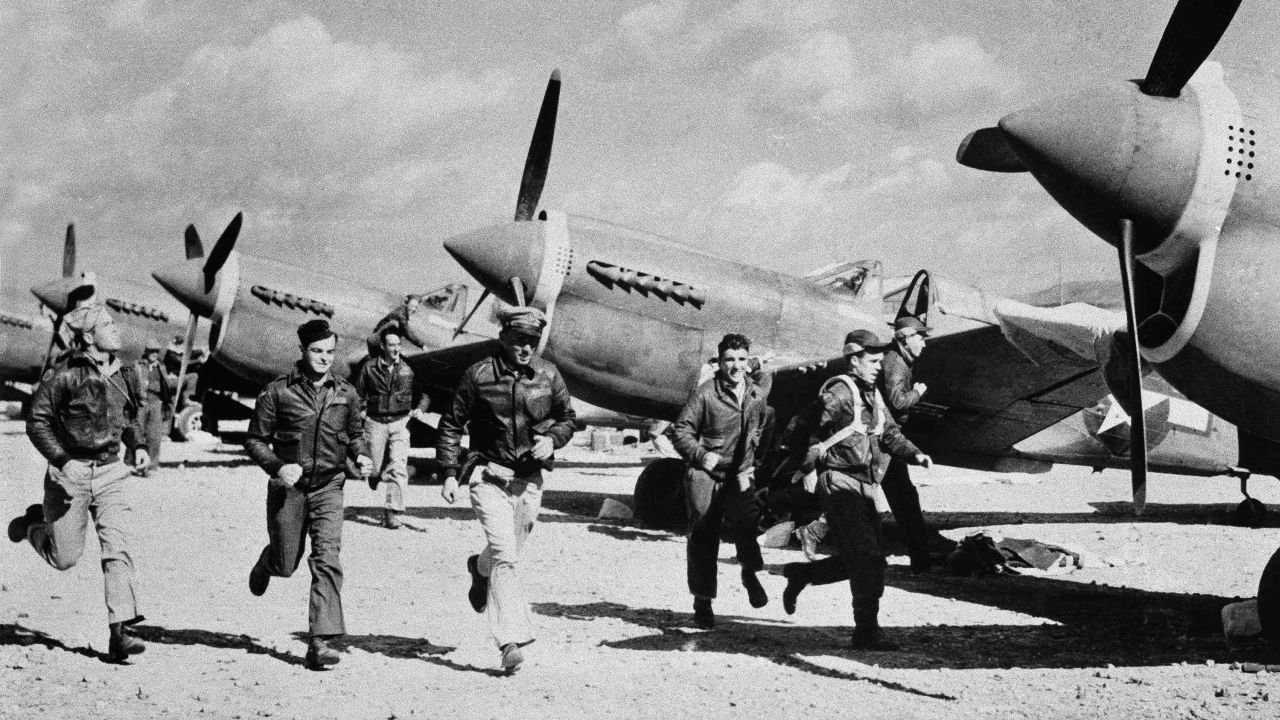
The Flying Tigers have become part of a wider struggle over historical ownership in East Asia. For Taiwan, the challenge is to preserve the Republic of China’s wartime agency without allowing that history to be absorbed into Beijing’s present-day nationalist narrative.
President Donald Trump’s reference to the Flying Tigers during his second summit with Xi Jinping offers a useful starting point for examining the politics of wartime memory in East Asia. By recalling how the United States and China fought on the same side during the Second World War, Trump invoked a shared historical experience at a moment when Washington and Beijing were seeking greater strategic stability. The reference also raised a more difficult question: which “China” fought alongside the United States, and who today can claim the political legacy of that wartime partnership? The answer involves Washington and Beijing, but also Taiwan’s contested historical identity and Japan’s changing security role.
The Flying Tigers and America’s Historical Ambiguity
The Flying Tigers operated when the government recognised by the United States was the Republic of China under Chiang Kai-shek. The People’s Republic of China did not exist until 1949. The wartime partnership was therefore between the United States and the ROC government. Trump, however, referred simply to “China”. Washington could invoke wartime cooperation without reopening questions of historical representation and state succession, while Beijing could use the same language to support a longer narrative of US–China cooperation. At a time of continuing competition over trade, technology, artificial intelligence and regional security, wartime memory provides one of the few symbolic resources available to both governments.
That ambiguity also gives Beijing considerable room to reinterpret the past. References to “China” that make no distinction between the ROC and PRC allow Republican-era history to be incorporated into the historical narrative of the contemporary Chinese state. Washington may use the wartime alliance mainly as diplomatic symbolism. Beijing has stronger reasons to establish political ownership over that memory and connect it to the historical legitimacy of the PRC.
How Beijing Incorporates Republican History
China’s account of the War of Resistance against Japan has changed considerably over the past several decades. Earlier revolutionary narratives placed the Chinese Communist Party at the centre of resistance and gave substantially less attention to the Nationalist government and army. More recent accounts have widened the frame to include Nationalist forces, overseas Chinese, Taiwanese and other social groups in what Beijing describes as a national war of resistance. Wartime victory can consequently be presented as a collective achievement of the Chinese nation while the CCP retains authority over its contemporary political meaning.
Recent statements by the Taiwan Affairs Office follow this pattern. Beijing has accused Taiwan’s current government of distorting or disrespecting the history of resistance against Japan, while insisting that victory belonged to all Chinese, including people in Taiwan. Wartime memory is linked directly to national unity and eventual unification. The history of resistance thus becomes part of the PRC’s claim to political and historical continuity with the Chinese nation as a whole.
The expanded narrative nevertheless runs into a basic historical problem. Beijing seeks continuity from resistance against Japan through the establishment of the PRC in 1949 to national rejuvenation today, yet between 1937 and 1945 the Republic of China formally represented China internationally, maintained the alliance with the United States, deployed the Chinese Expeditionary Force and ultimately accepted Japan’s surrender.
Beijing has responded by absorbing Republican history without fully recognising the Republic of China as a historical political subject. Nationalist soldiers can be acknowledged for their wartime contribution, and Chiang Kai-shek can reappear selectively in museums and commemorative narratives, while the ROC as the state representing China during the war remains denied equivalent political legitimacy. The CCP’s revolutionary history alone cannot encompass the full history of modern China. Parts of the Republican past must therefore be incorporated, even as their political implications are contained.
Japan and the Return of Wartime Memory to Security Politics
The historical debate has acquired greater contemporary relevance under Japanese Prime Minister Sanae Takaichi. Her positions on defence, Taiwan Strait security, constitutional revision and the Yasukuni Shrine give Beijing ample grounds to connect current Japanese security policy with the older language of militarism and wartime responsibility. As Japan places greater emphasis on China’s military rise, regional contingencies and stronger defence capabilities, Beijing has responded by invoking memories of Japanese aggression and warning against renewed militarism. Wartime memory has moved back into contemporary Sino-Japanese security politics.
The interaction can become self-reinforcing. The more Japan treats China as a security challenge, the easier it becomes for Beijing to mobilise wartime history. The more Beijing portrays contemporary Japan through the lens of militarism, the stronger the case Japanese leaders can make for greater defence spending and closer security cooperation with the United States. Historical memory and present strategic behaviour increasingly feed into one another. Taiwan occupies a central place in this process because Chinese and Japanese security narratives now both situate the Taiwan Strait within their wider understanding of regional order.
Chinese public attitudes towards Japan are more complicated than official discourse suggests. Anti-Japanese sentiment remains substantial when wartime history, territorial disputes or Japanese defence policy become politically salient. At the same time, Japanese consumer products, technology, tourism, popular culture and aspects of social life continue to attract many Chinese citizens. Negative views of the Japanese government can coexist with positive or pragmatic attitudes towards Japanese society. Official nationalism shapes the political environment, but does not fully determine social attitudes towards Japan.
Taiwan’s Struggle over Historical Ownership
The Flying Tigers controversy poses different problems for Taiwan’s two major political parties. For the Democratic Progressive Party, present-day security understandably receives priority. Its political narrative stresses pressure from the PRC and the importance of cooperation with the United States, Japan and other democratic partners. Excessive distance from the ROC’s wartime history, however, risks leaving Beijing with greater room to appropriate a historical legacy that belonged to the Republic of China.
The Kuomintang confronts the opposite problem. It has stronger reasons to emphasise the ROC’s wartime leadership and the role of the Nationalist government, and that position rests on a clear historical foundation. Yet an account framed primarily through common Chinese national resistance can readily overlap with Beijing’s language of national unity and be drawn into its unification narrative.
Taiwan need not choose between close relations with Japan and recognition of the war against Japan. Nor does recognition of the ROC’s wartime role imply acceptance of Beijing’s contemporary political claims. Historical responsibility and present strategic relationships belong to different contexts. Imperial Japan invaded China, and that history should not be erased. The Republic of China was the government that represented China and fought alongside the United States during the Second World War. Post-war Japan has since become a democratic state and one of Taiwan’s most important economic and security partners. These positions are historically and politically compatible.
Wartime memory has consequently become an arena of political competition among all four actors. Beijing draws on the anti-Japanese war to reinforce national unity, PRC legitimacy and its claim to historical continuity. Japan emphasises its post-war democratic transformation while redefining its security role in response to regional change. The United States invokes wartime cooperation when it helps stabilise relations with Beijing, while preserving its alliance with Japan and its security relationship with Taiwan. Taiwan carries a historical inheritance that does not fit neatly within any of these narratives.
A viable Taiwanese position should connect the ROC’s historical agency with Taiwan’s contemporary democratic identity. The ROC’s role in the Second World War forms part of Taiwan’s institutional and historical inheritance without requiring a return to an older form of Chinese nationalism. Close cooperation with Japan today likewise does not require forgetting Japan’s wartime aggression.
Trump’s reference to the Flying Tigers brings these competing historical claims into unusually sharp focus. Beijing is incorporating Republican-era history into its national narrative, Japan is redefining its post-war security role, and Washington retains the advantages of historical ambiguity. Taiwan has less room for such ambiguity. It needs to state more clearly how the Republic of China’s wartime history relates to the democratic political community that exists in Taiwan today, before that relationship is defined elsewhere.
カテゴリー
最近の投稿
- The Flying Tigers and the Battle over Wartime Memory in East Asia
- WWⅡの同盟国・米中の敵国は日本 そこに潜む中国の恐るべき「新型軍国主義・日本とG2」構図
- Casting out the communists
- トランプ「中国は同盟国」発言は事前に習近平と調整 梯子を外された高市首相
- 習近平の訪米:日本と台湾は米中交渉のどこに注目すべきか
- 米シンクタンク「米軍は第二列島線まで退くべき」(台湾放棄、日米同盟破棄…)の衝撃 その1 実現性は?
- 「習近平が倒れた」という噂の正体 BRICS首脳会議で
- Xi Jinping’s US Visit: What Japan and Taiwan Should Watch in US–China Bargaining
- 「習近平訪米の計算式」Ⅲ 中東・アフリカの要衝に王手! エジプトと軍事演習
- 「習近平訪米の計算式」Ⅱ 世界人口の42%を占める上海協力機構 習近平「イランとの距離の取り方」
RSS